Equipment
Tampers, mats and the rest of the counter
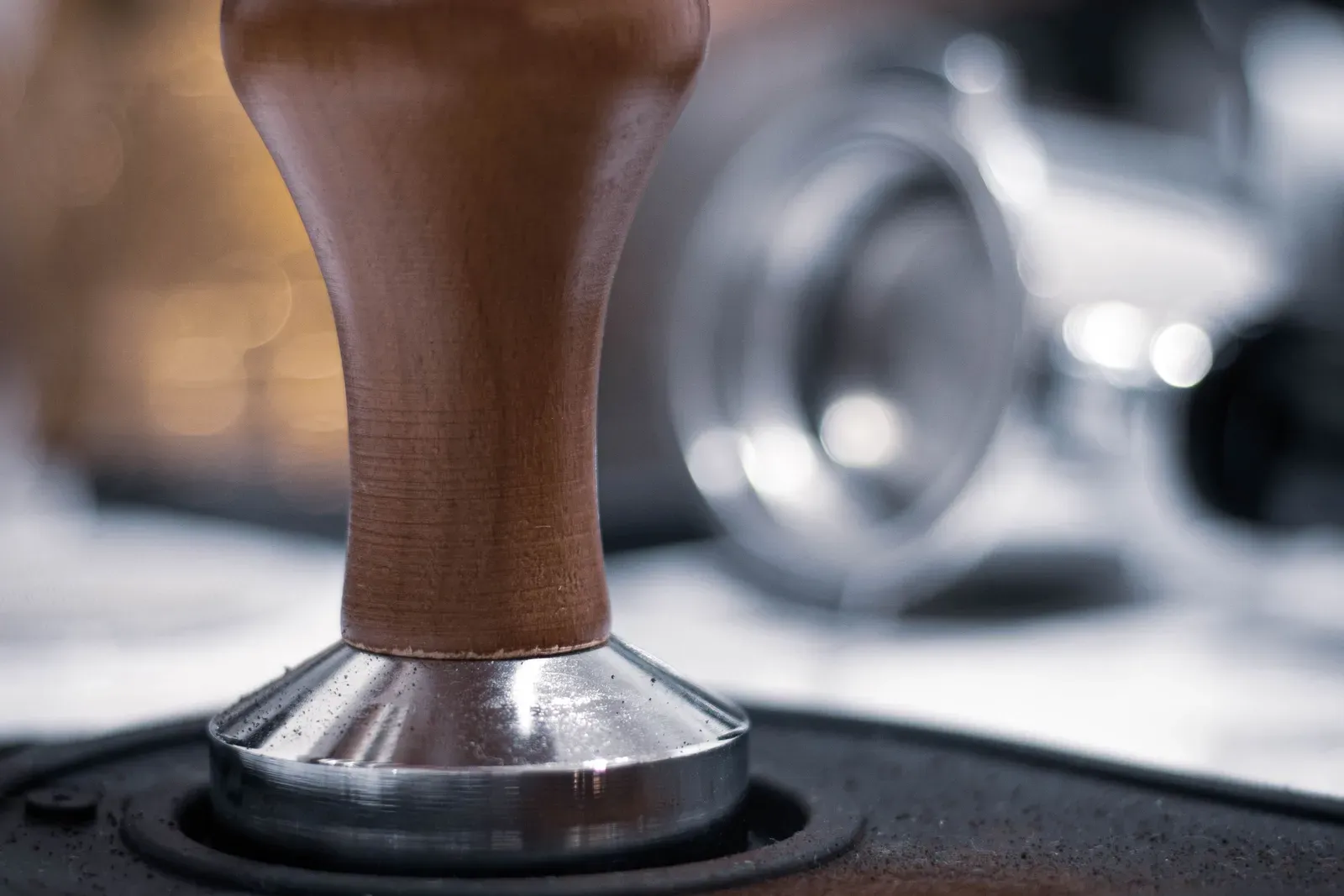
Once the scale, timer and cloth are on the bar (we covered them in the scale, the timer and the cloth), the next tools are the ones you hold in your hand between grinder and machine. This is where it is easiest to spend money on things that do not change the cup.
The tamper
The plastic tamper that comes with most home machines is too small, too light and usually not flat. Replacing it is worth doing. Our piece on tamping explains why level matters far more than force; the tamper’s job is to make level easy.
Size first. The tamper must match the inside of the basket, not the name of the machine. A gap of more than about half a millimetre leaves a ring of loose coffee around the edge, which water finds immediately. Common sizes are 51, 53, 54 and 58 mm; precision 58 mm baskets often want a 58.4 or 58.5 mm tamper.
Base shape. Flat is the safe default. Convex and ripple bases have supporters, but the difference in the cup is small and inconsistent.
Weight and handle. A heavy tamper does more of the work and a handle that fits your hand makes a level press easier. This is comfort, not chemistry.
Calibrated and self-levelling tampers. A spring that clicks at a set force makes every tamp the same, and a collar that sits on the basket rim keeps the base flat. Both remove variables, which helps beginners. Neither makes better coffee than a level, firm tamp by hand.
The mat
Tamping a portafilter on a stone or wooden counter damages both. A rubber tamping mat with a step for the portafilter spout costs very little, protects the counter and holds the portafilter steady so your press stays vertical. A corner mat that sits on the counter edge works well in a small kitchen.
The knock box
Spent pucks need somewhere to go. Knocking them into a kitchen bin works until the bar of the portafilter cracks the bin liner or the bin itself. A knock box with a rubber covered bar takes the impact, and emptying it once a day keeps the kitchen cleaner. A puck that comes out whole and dry is also a useful sign of good puck prep.
Distribution tools
A needle tool (WDT) breaks up clumps through the whole depth of the bed and is the one distribution tool we recommend without hesitation. Spinning distributors level the surface only. They are fine as a second step, but they are often bought instead of a needle tool and that is the wrong way round.
What to skip
- Tamper stations with built-in everything. They look tidy and take more space than they save.
- Dosing funnels in the wrong size. A funnel that does not sit firmly on the basket spills more than it saves.
- Puck screens, as a first purchase. They keep the shower screen clean and can even out flow a little, but they are a refinement for later.
Our wider list of the barista kit worth buying puts all of this in order of usefulness, and the milk kit guide covers the other side of the bar.
Frequently asked
- What size tamper do I need?
- Measure the inside of your basket at the top. Most commercial style machines use 58 mm baskets and a 58.3 to 58.5 mm tamper; many home machines use 51, 53 or 54 mm. The tamper should be within about half a millimetre of the basket's inner diameter.
- Is a spring loaded tamper worth it?
- It gives the same pressure every time, which removes one variable for a beginner. Since pressure barely matters past a firm push, the real benefit is that many also self-level. For an experienced hand, a plain heavy tamper is just as good.
Related reading
The heart and the rosetta, step by step
The two first latte art patterns, broken into the movements that make them: height, tilt, flow and the final lift through the middle.
The scale, the timer and the cloth
Three cheap things sit next to every good espresso machine. Why each one matters more than most upgrades, and what to look for when buying them.
Temperature surfing on a single boiler
A single boiler machine without a PID swings several degrees around its set point. Temperature surfing is the routine that lands every shot in the same place.