Buying guides
The best hand grinder at every budget
Four hand grinders from about $89 to $289, sorted by budget and then by use: what the extra money buys, and what grinding by hand costs you.
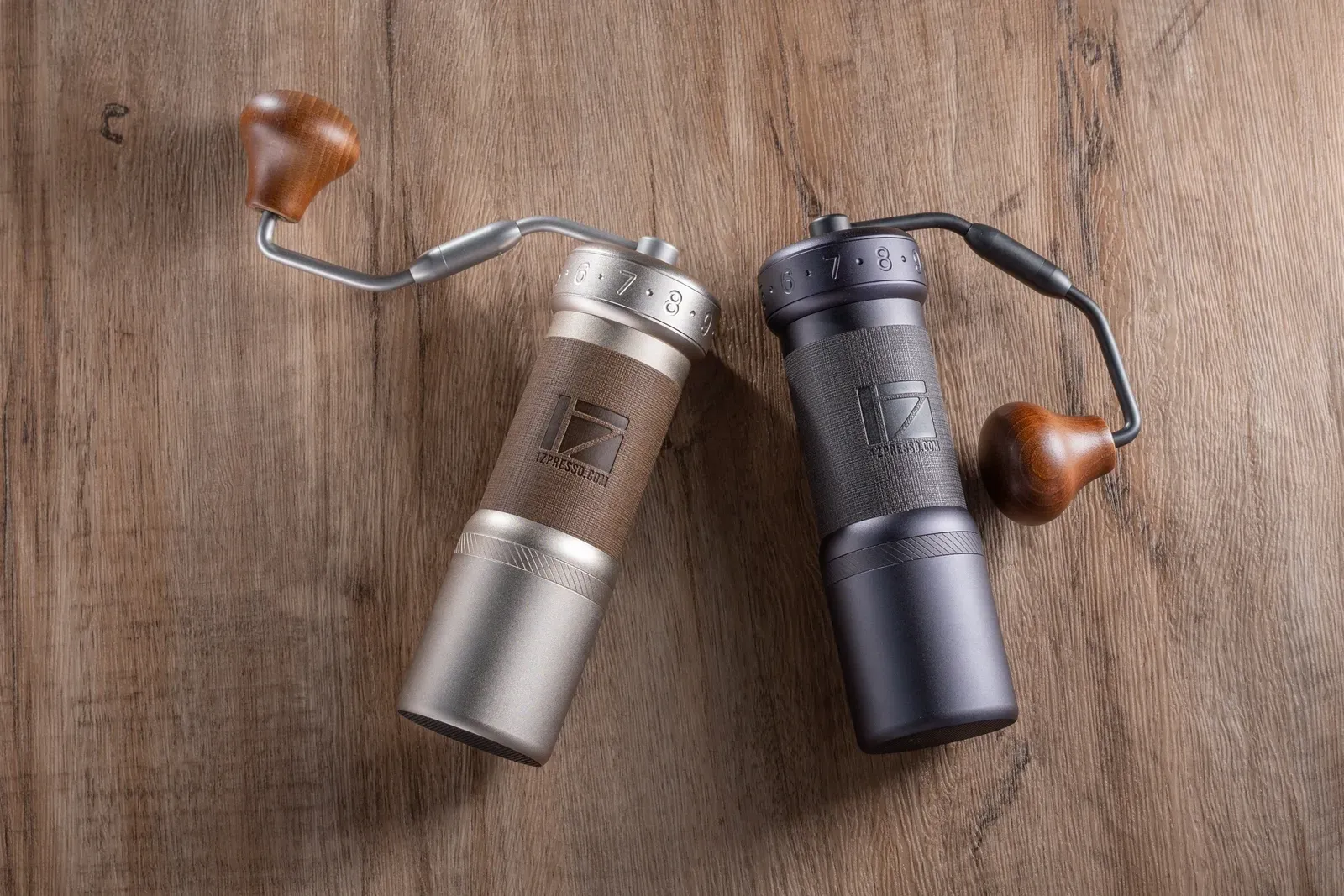
Featured
4 buying guides
Best under $100
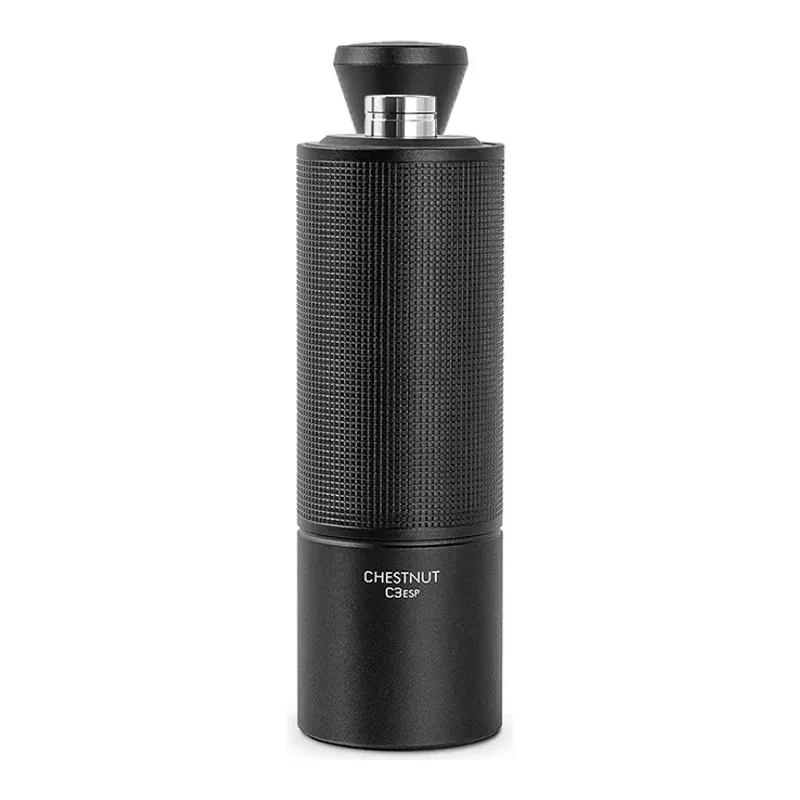
Timemore
Timemore Chestnut C3 ESP
A good filter grinder that can reach espresso. Slow at fine settings, and adjusted from underneath.
- Burrs
- 38 mm stainless steel
- Adjustment
- Internal clicks, finer than the C3
- Body
- Aluminium
Best for filter, espresso possible
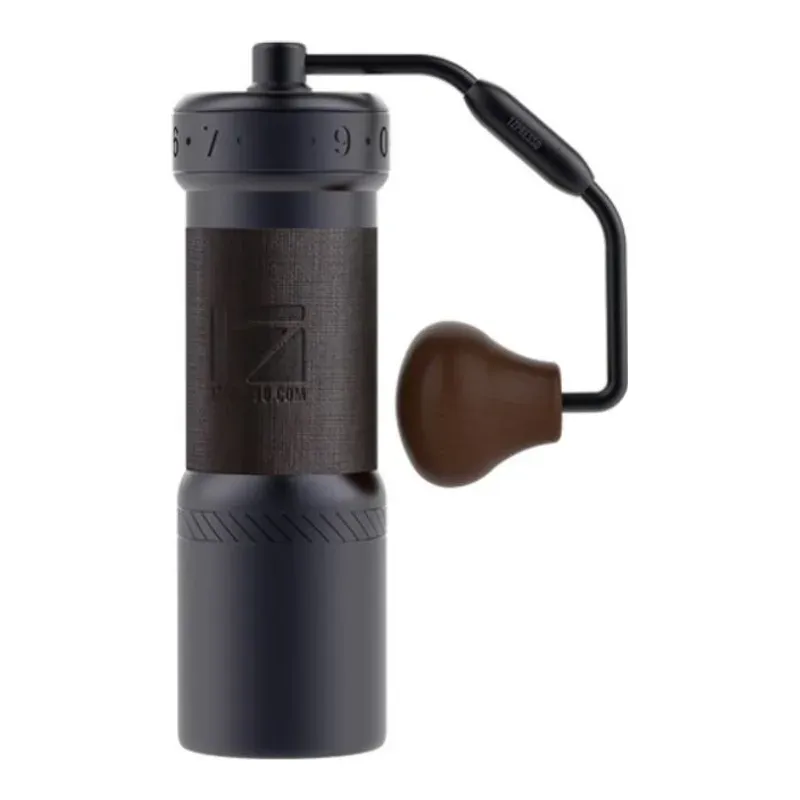
1Zpresso
1Zpresso K-Ultra
Bigger burrs and an outside dial for about $120 more. The one to buy if you are not sure what you will brew in a year.
- Burrs
- 48 mm conical, stainless steel
- Adjustment
- External dial
- Built for
- Filter, espresso possible
Best for espresso
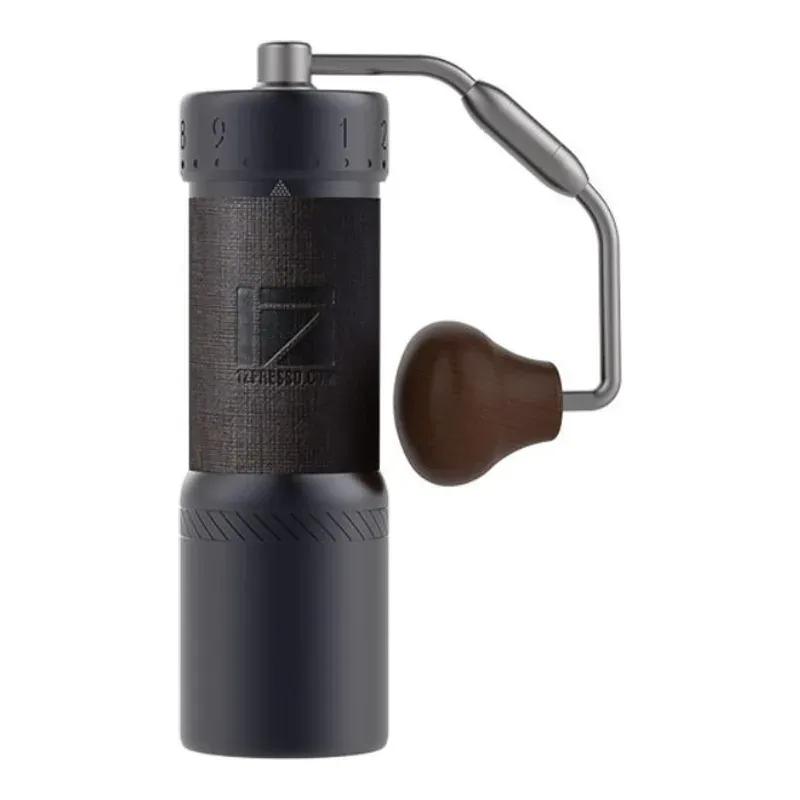
1Zpresso
1Zpresso J-Ultra
Small steps where a shot needs them, and the same 48 mm burrs. Filter works, at the cost of more turns on the dial.
- Burrs
- 48 mm conical, stainless steel
- Adjustment
- External dial, fine steps
- Built for
- Espresso
The filter reference
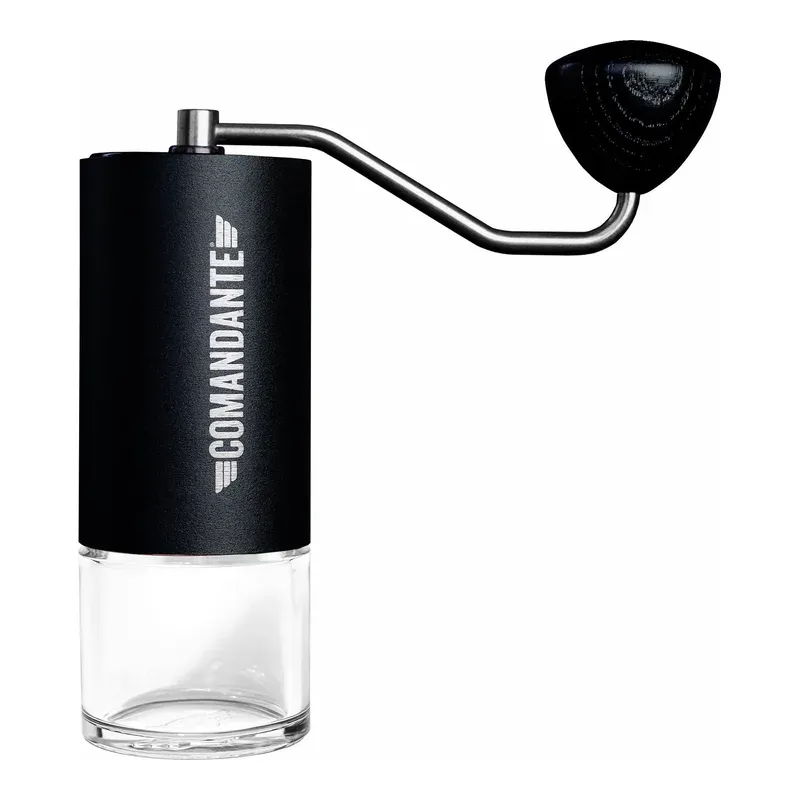
Comandante
Comandante C40 MK4
Small burrs, very good steel, a clean cup. Internal clicks, glass jars, and an accessory if you want espresso.
- Burrs
- 39 mm conical, Nitro Blade
- Adjustment
- Internal click wheel
- Built for
- Filter
Four grinders, three budgets
The answer first, the reasons after.
| Budget | Pick | Built for | Gives up |
|---|---|---|---|
| About $89 | Timemore Chestnut C3 ESP | Filter, espresso with patience | Speed, rigidity at espresso |
| About $209 | 1Zpresso K-Ultra | Filter first, espresso possible | The finest espresso steps |
| About $219 | 1Zpresso J-Ultra | Espresso | Quick changes to coarse filter |
| About $289 | Comandante C40 MK4 | Filter | An outside dial, espresso steps as standard |
Two things are settled elsewhere, so they are not repeated here. Whether a hand grinder is the right tool at all is in hand grinders: when they beat an electric. Burr shape is not a variable in this guide: all four are conical, as nearly every hand grinder is, and conical or flat burrs covers what that does in the cup.
What changes between $89 and $300
Mostly not the filter cup. A well-set C3 ESP makes a good V60. The money buys speed, repeatability, and how well the grinder holds up as the grind gets finer. Five things move.
Burr size and steel. 38 mm on the Timemore. 48 mm on both 1Zpressos. 39 mm on the Comandante. A bigger burr cuts more coffee per turn, so a dose takes fewer turns. The Comandante breaks the pattern on purpose: its burrs are small, and its price goes into Nitro Blade, a high-nitrogen martensitic steel that holds a sharp edge, and into a cutting geometry that made the C40 the filter reference. Diameter buys speed. Steel and geometry buy the distribution.
Bearings and wobble. A burr that moves sideways under load grinds at two gaps at once. At filter settings the gap is wide and a little play disappears into it. At espresso the gap is tiny and the force is high, and the same play becomes a wider spread of particles and a shot that will not repeat. Holding the axle rigidly is where a cheap grinder saves money, and it is invisible in a photo.
Adjustment resolution, and where the dial is. The Timemore and the Comandante adjust underneath. You take off the catch cup, turn a click wheel below the burr, and count from zero. The two 1Zpressos have a numbered dial outside, at the top. For one method, that barely matters. If you switch between espresso and filter in the same day, it decides whether you bother.
Step size only matters for espresso. Filter tolerates a coarse step; a shot does not. The C3 ESP exists because the plain C3’s clicks were too coarse for espresso. Comandante sells its Red Clix accessory for the same reason: it halves the step. The J-Ultra was designed around small steps from the start.
Speed per gram. 18 g at filter fineness takes twenty to thirty seconds on any of the four. Espresso is where 48 mm earns its money: fewer turns, and less force on each.
Capacity. Most hand grinders hold 20 to 40 g of beans. The C3 ESP is at the small end. That is enough for a cup or two, and it means a larger batch is two loads.
For filter
On $89, the C3 ESP. At filter settings its weakness is time, not quality, and the time is short.
At about $209, the K-Ultra. The bigger burrs are quicker, the dial is outside, and the espresso range is there if you buy a machine later. If you are unsure which way your brewing will go, this is the one.
At about $289, the C40 MK4. It is slower than the K-Ultra, it has no dial to read, and its glass jars do not like stone floors. People buy it anyway, for a clean, well-separated filter cup, and it has been the grinder others are compared to for years. Buy it if filter is what you drink and clarity is what you are paying for.
For espresso
Here the budget stops being optional. Wobble, step size and effort all get worse as the burrs close, and the cheaper the grinder, the more you feel all three.
The C3 ESP reaches espresso. Expect firm cranking, many turns of a 38 mm burr, and the odd bag where the setting you want sits between two clicks. Fine for learning, or for an occasional shot.
The J-Ultra is built for it: small steps, an outside dial, 48 mm burrs. It is the one to buy if grinding by hand is how you intend to make espresso every day, and it is the hand-grinder profile in choosing an espresso grinder, set against two electrics.
The K-Ultra makes espresso with coarser steps. That is fine on a forgiving medium roast and less so on a light one, where dialling in means moving a few seconds at a time.
The C40 with Red Clix works. It is still a filter grinder doing the other job. Buy it for espresso only if filter is most of what you drink.
What a hand grinder costs you
Time. Twenty to thirty seconds per filter dose. Thirty to sixty for espresso. Every dose, every day.
Arm. Filter is one hand and light work. Espresso is two hands and a real effort, and a dense light roast is harder still. A bigger burr helps. It does not make it effortless.
Maximum dose. One load is one dose. 30 g for a French press for two fits. A litre of cold brew does not. Three flat whites for guests means three fine doses back to back, and the third one is where the enthusiasm ends.
The line in the hand grinder article is about three drinks a day, or regular doses above 25 g. Past it, a motor is worth paying for, and the best grinders under $300 is where to look. Below it, a hand grinder is the better burr set for the money.
What not to pay for
Click counts on the box. A grinder advertising a hundred clicks per turn tells you nothing until you know how far each one moves the burr, and where in the range they are spent. Forty well-placed steps beat a hundred spread from Turkish to cold brew.
Finish. Wood, knurled aluminium and colour options change the price, not the grind. The C40’s wooden knob is pleasant. It is not why it is the reference.
Spare burr sets bought up front. Steel burrs at home last years. Buy replacements when the grinder starts needing finer settings for the same coffee, and check the burr chamber for compacted fines before you do.
Which one
Filter only, tight budget: the C3 ESP. Filter now, espresso maybe: the K-Ultra. Espresso by hand, daily: the J-Ultra. Filter, and you want the reference: the C40 MK4. Every other hand grinder is on the manual grinders hub.
Frequently asked
- Can a hand grinder under $100 make espresso?
- The Timemore C3 ESP can, and its finer clicks exist for that. Expect firm cranking, a lot of turns, and now and then a bag where the right setting sits between two clicks. For learning, or an occasional shot, it works. If espresso is your daily drink, the J-Ultra is the better buy.
- K-Ultra or J-Ultra?
- Same burr size, same outside dial, similar price. The K-Ultra spreads its steps across filter and espresso; the J-Ultra spends them on espresso. Filter most days, take the K. Espresso most days, take the J.
- Why does the Comandante cost the most with the smallest burrs?
- The money goes into the steel and the cutting geometry, not the diameter. Burr size buys speed. The C40's Nitro Blade burrs are what give it the filter cup it is known for.