Coffee culture
Cafe culture, and what the three waves actually mean
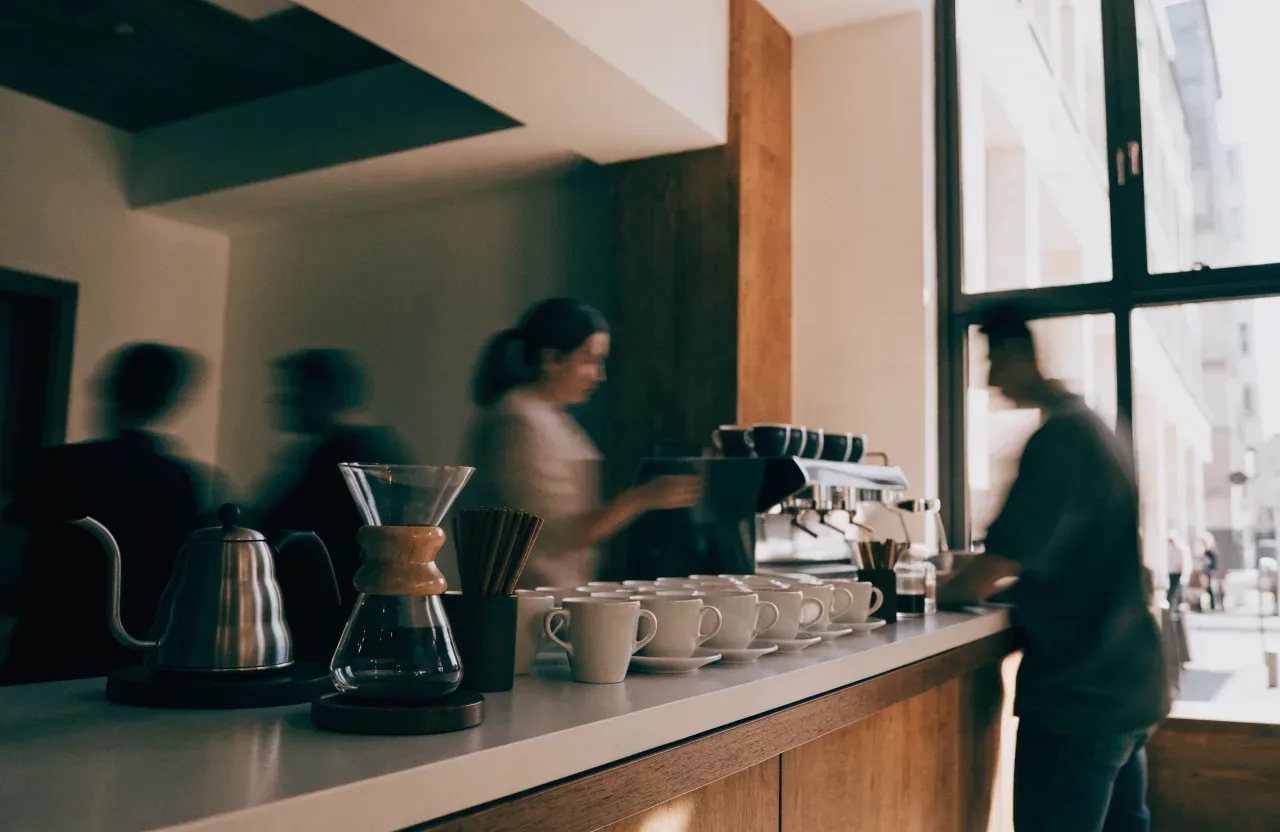
A phrase from one article in 2002
The three waves are not a period scheme agreed by historians. They come from a single short article written in 2002 by Trish Rothgeb, then publishing as Trish Skeie, for the newsletter of the American Roasters Guild. She was trying to name a shift she could see in her own trade, and she borrowed the wave metaphor from feminism, where it was already being used to describe successive generations reacting to each other.
That origin explains both the usefulness and the limits of the framing. It is a sharp description of how coffee was sold in the United States, and to a lesser extent in Britain, Australia and Scandinavia, across about seventy years. It was never a map of the world, and it was written by someone inside the third wave about her own side of the argument. Take it as an industry’s story about itself, told forward, and it is genuinely illuminating. Take it as history and it starts excluding whole countries.
First wave: coffee as a household commodity
The first wave is coffee treated as a grocery staple, and it is by far the largest of the three by volume. Its achievements were industrial rather than gastronomic: vacuum packing, which let a roaster ship nationally instead of selling locally; the tin, the supermarket shelf and the brand; instant coffee, which arrived at scale with a freeze-dried process and then travelled the world in a soldier’s ration pack.
The priorities were consistency, price and shelf life, and the coffee was engineered for them. Blends were built to taste the same in January and July, which means built around whatever was cheap and available, which usually meant a significant share of robusta. Roasts went dark, partly because dark roasting flattens the differences between lots and partly because it hides staling. None of this was incompetence. It was a set of sensible answers to the question of how to get drinkable coffee into ten million kitchens, and it is still how most of the coffee in the world is sold.
Second wave: the cafe becomes the product
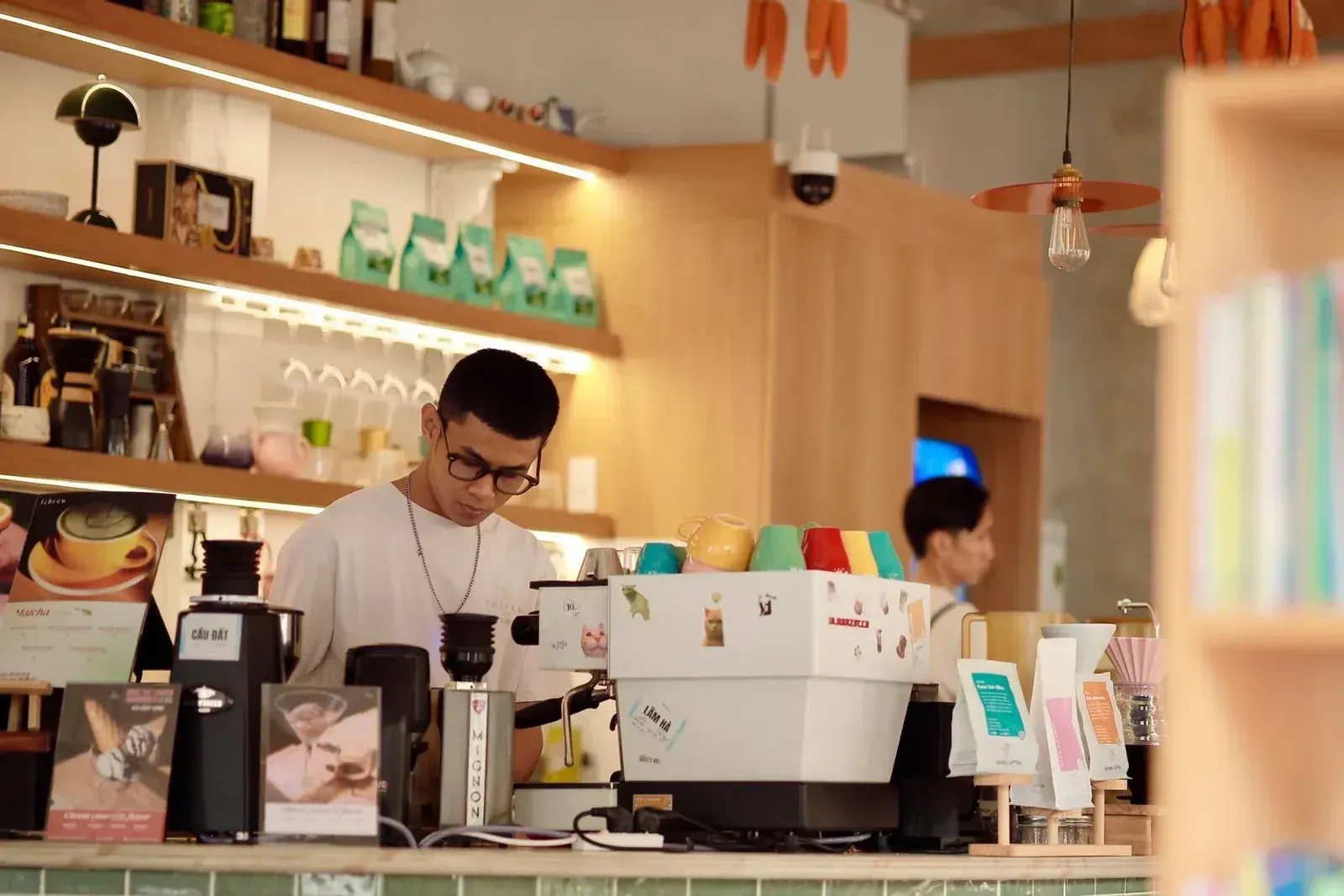
The second wave sold something the first could not put in a tin, which was somewhere to be. Its chronology runs from the American West Coast in the late 1960s, through the growth of the big chains in the 1980s and 1990s, to the point where an espresso bar was a normal fixture of a high street on four continents.
What changed in the cup was real but narrow. Coffee was sold by the cup rather than the pound, whole bean rather than pre-ground, with the country of origin printed on the bag and an Italian vocabulary on the menu board. The roast style stayed dark, and the drinks moved decisively towards milk and sugar, which is where the caramel and the syrup pumps come from. The distinctive product was the room: the counter, the stool, the queue, the name on the cup, a consistent experience anywhere in the world.
It is worth resisting the sneer here. Most people who now care about origin met coffee through a chain, and the second wave built the supply chains, the training systems and the customer expectation that the third wave later inherited and criticised.
Third wave: the farm and the roast as the subject
The third wave puts on the label what the first two left off. A bag names the farm or the washing station, the altitude, the variety, the processing method and the harvest year, and the roaster roasts light enough for those things to be tasted, which is an explicit bet on the raw material. Brewing moves back towards filter, weighing and timing become normal, and the barista is presented as a technician rather than a server.
The trade changes with it. Buying moves from year-round contracts for consistent blends towards individual lots, seasonal offers and, at its best, direct relationships with producers, which is why a third wave bag that goes quiet about its origin is a contradiction in terms. What separates it from marketing language is whether that specificity survives a question, a distinction taken apart in what specialty coffee actually means.
The costs are real too. Lot-level buying is inefficient, light roasting is unforgiving to brew badly, and a menu of changing single origins is harder for a customer than a fixed house blend, which is part of why the blend never went away.
The countries the story leaves out
Now the honest part. Italy did not pass through these waves. The bar espresso served standing at a counter was a settled national habit by the 1950s and has barely moved since. Turkish and Greek coffee, boiled fine in a cezve and served unfiltered, predates the whole sequence by four centuries. Ethiopia has been roasting and brewing coffee domestically, in the home, since before anyone exported it. Vietnam built an enormous coffee culture on robusta, condensed milk and a metal phin filter without reference to any of this.
Calling those cultures pre-wave, or implying they are waiting for a third wave to arrive, is the point at which a useful industry shorthand turns into a bad account of the world. The waves describe how coffee was marketed in a handful of wealthy consuming countries. They do not describe coffee. A survey of how it is actually drunk is in how the world actually drinks coffee.
Frequently asked
- Who invented the term third wave coffee?
- Trish Rothgeb, a roaster and trainer then writing as Trish Skeie, used it in an article for the Roasters Guild newsletter in 2002. She was describing what she saw happening in American roasting, and she has since said publicly that she did not intend it as a hierarchy or a badge.
- Is there a fourth wave?
- People announce one regularly, usually meaning either coffee treated with the equipment and vocabulary of a science lab, or specialty going mainstream. None of the definitions has stuck, which is a reasonable sign that the wave metaphor has stopped doing useful work.
- Does third wave just mean expensive coffee served slowly?
- It means the origin, the producer and the roast are treated as the subject of the drink rather than as background. That often costs more, because lot-level buying and lighter roasting are both expensive. Price alone tells you nothing, and plenty of costly coffee is opaque about where it came from.
Related reading
The Ethiopian coffee ceremony, from green bean to third cup
Green beans roasted in a pan, pounded by hand, boiled in a clay jebena and poured three times. How buna is made, and why it takes an hour.
Cupping at home
The protocol professionals use to taste coffee, stripped to what works on a kitchen table, and what it is actually good for.
How to read a bag of coffee
Roast date, process, altitude, varietal and the tasting notes: what each line on a bag is actually claiming, and which ones are worth paying for.