Manual grinders
Hand grinding for espresso, honestly
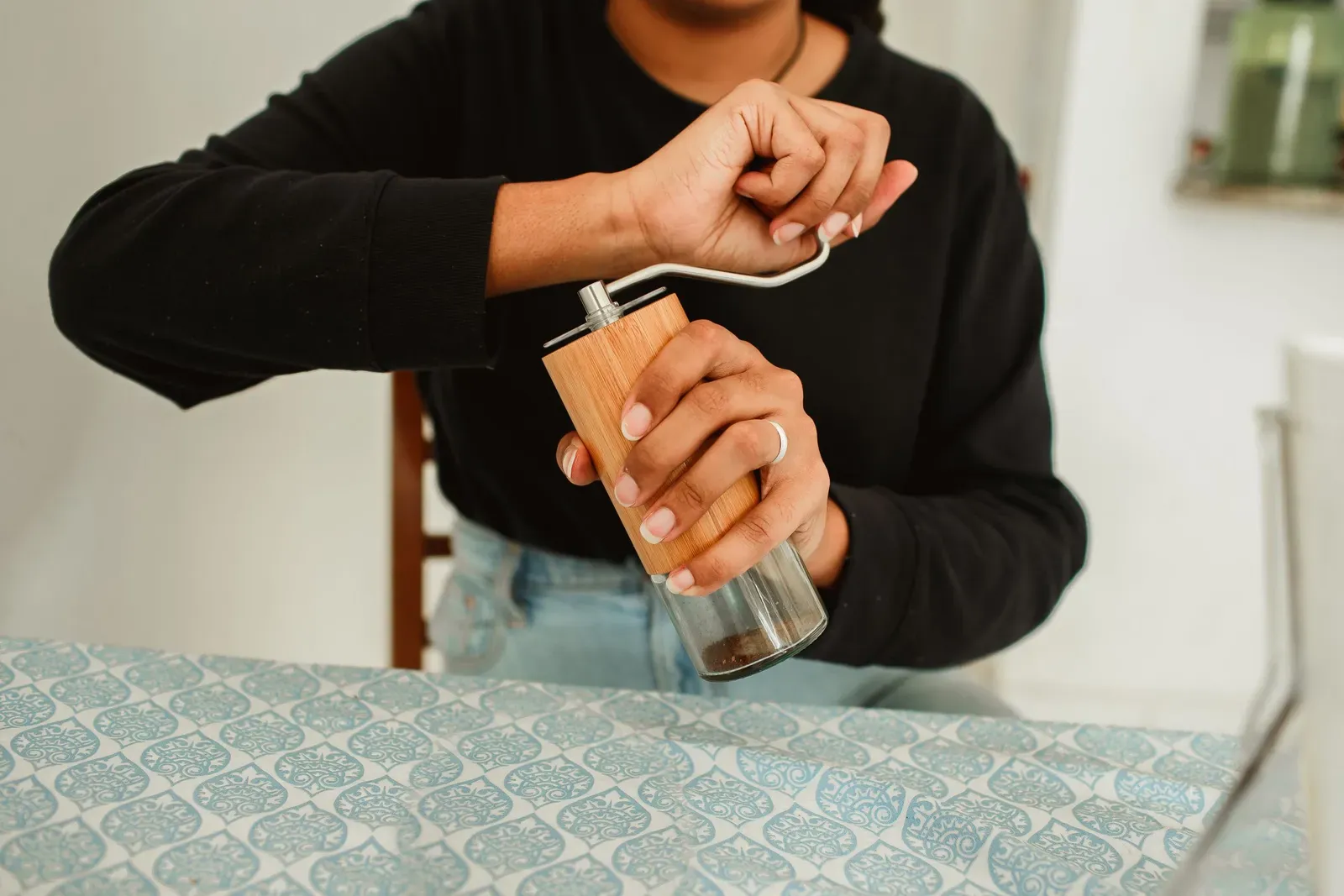
I ground every espresso by hand for two years. Not out of principle: I had a lever machine, a small kitchen and a budget that ran out after the machine. So this is not a theoretical opinion. It is what I would tell a friend who asked whether to do the same.
The cup is not the problem
Let me start with the part that surprises people. A good hand grinder built for espresso makes espresso that is very hard to tell apart from what a decent electric produces. Sometimes it is better.
The reason is simple. A hand grinder spends its whole budget on the parts that touch the coffee: steel burrs, two bearings, a stiff body. There is no motor, no gearbox, no electronics and no chute. A 200 euro hand grinder is all burrs and alignment, while a 200 euro electric is a motor with burrs attached. The anatomy of a hand grinder shows where that money goes.
There is also no retention to speak of. What goes in comes out, which is what single dosing electrics spend a lot of engineering trying to achieve.
The effort is the problem
Espresso is the finest grind you will ever ask of a burr set. Filter coffee at a medium setting takes maybe twenty seconds by hand. Eighteen grams for espresso, on a grinder with 48 mm burrs, takes between forty seconds and a minute and a half depending on the bean. Light roasts are denser and fight back harder.
Forty seconds sounds like nothing. Forty seconds of firm, steady cranking while holding a grinder still against your chest, before coffee, on a Tuesday, is a different thing. On the first morning it is a ritual. By the third week of winter it is a chore, and by the second month many people are buying pre-ground “just for weekdays”.
If you make a second drink for someone else, double it. If you dial in a new bag and pour three shots to get there, you have just ground for four minutes.
Who it works for
It works if you make one or two espressos a day and enjoy the process. It works on a lever machine, where the ritual is the point anyway. It works on a budget, where the alternative is a cheap electric with a wobbly burr carrier. And it works for travel, alongside a hand pump espresso maker.
It does not work for a household that drinks four milk drinks before 8am, or for anyone with a wrist or shoulder problem. Be honest about which one you are before you buy.
Buy the right one, or none
The worst outcome is a filter hand grinder pressed into espresso duty. Coarse adjustment steps mean you cannot hit the window, and a single bushing means the grind is uneven even when you do. You end up chasing sour shots that no recipe will fix.
If you go this way, buy a grinder sold for espresso, with an external ring moving in steps of 25 microns or less. Our hand grinder guide lists the ones that qualify, and the espresso grinder guide shows what you would spend on an electric that matches them.
My verdict
A hand grinder is the cheapest way to get espresso grinding that does not limit your machine. It is not the cheapest way to make espresso every day for years, because the cost is paid in effort, not in money. I stopped when I could afford an electric, and I kept the hand grinder for travel. I suspect that is the most common ending.
Related reading
Anatomy of a hand grinder
Burrs, shaft, bearings, adjustment ring and catch cup: what each part of a hand grinder does, and which ones decide whether it is worth the money.
Single dosing: what it fixes, and what it does not
Weighing beans for each cup instead of filling a hopper solves stale coffee and easy bean switching. It does not fix burrs, alignment or a bad recipe.
Conical or flat burrs
The burr shape argument, with the marketing removed: what each geometry does to the grind distribution, and when it matters in the cup.