Electric grinders
Single dosing: what it fixes, and what it does not
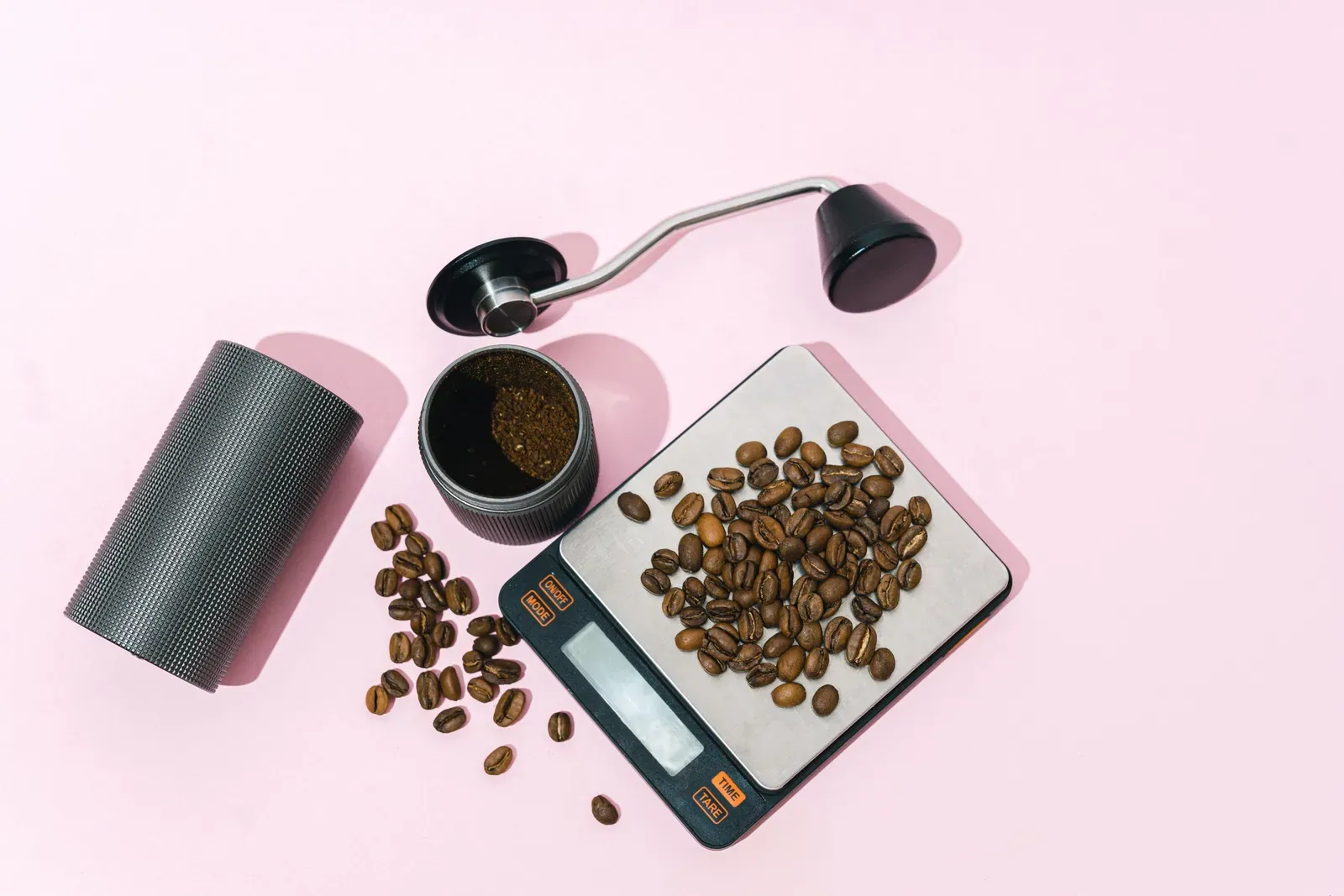
Single dosing is the habit of weighing out exactly the beans for one cup, grinding all of them, and keeping the rest of the bag sealed. The hopper stays empty. It started with espresso enthusiasts and is now a selling point printed on grinder boxes. It deserves a clear description of what it actually changes.
What it fixes
Freshness. Beans sitting in a hopper are exposed to air and light all day. A hopper is a poor container, and our guide to storing coffee at home explains why. Single dosing keeps every bean in its bag or jar until the moment it is ground.
Switching coffees. If you drink a decaf in the afternoon, or keep an espresso blend and a light filter roast side by side, a hopper makes that awkward. Single dosing lets you change between cups.
Knowing your dose. Weighing the beans means you know exactly what went into the basket, which is the first condition for adjusting a recipe. Our piece on moving the dose up and down depends on that number being real.
Purging. On a hopper grinder, the first few grams after a setting change are the old grind. With a low retention single dosing grinder, there is little or nothing to purge.
The condition: low retention
None of that works if the grinder holds on to coffee. Retention is the grounds that stay in the burr chamber and the chute after each grind. On many hopper grinders it is between one and several grams. In single dosing, those grams come out in the next dose, so 18 grams in means 16 grams of today’s coffee plus 2 grams of yesterday’s.
Grinders designed for single dosing reduce that with a short, straight path from burrs to exit, steep chamber walls and often a bellows on top to push the last grounds out. Our article on grinder care and retention covers how to measure it on your own grinder: weigh in, weigh out, compare.
What it does not fix
Single dosing is a workflow, not a burr set. It does not:
- make a cheap burr set cut more evenly;
- correct a burr carrier that wobbles;
- stop clumping, which is a static and grind problem;
- replace puck prep or a correct ratio.
There is also one thing it makes slightly worse. With an empty hopper, the last few beans bounce around the burrs instead of being pressed down by the weight of the beans above, and grind a little less evenly. A light press on the bellows or a weighted lid solves it.
Is it worth it at home?
If you drink one coffee at a time and change beans often, yes, and it costs nothing but a scale you probably already own. If you make the same espresso for a family every morning, a hopper with a short, well-sealed bean supply works fine, as long as you purge after changing the setting.
For buying, our guide to choosing an espresso grinder flags which grinders are built for single dosing and which only claim to be.
Frequently asked
- What is retention?
- The grounds that stay inside the grinder after each grind, in the burr chamber and the chute. On some hopper grinders it is several grams. Those grounds are stale by the next morning and are pushed out into your next dose.
- Do I need bellows or an RDT spray?
- Neither is mandatory. A bellows pushes out the last grams of retention after each grind, and a drop of water on the beans (the Ross droplet technique, or RDT) cuts static and clumping. Both help on a grinder that is already low retention; neither turns a high retention grinder into a single dosing one.
Related reading
Hand grinding for espresso, honestly
A good hand grinder can match an electric costing three times as much in the cup. What it costs you instead is time, effort and patience at 7am.
Conical or flat burrs
The burr shape argument, with the marketing removed: what each geometry does to the grind distribution, and when it matters in the cup.
Dialling in a new bag
A repeatable routine for the first four shots from a new coffee: what to fix, what to change, and how to know when you are done.