Ratio
Moving the dose up and down
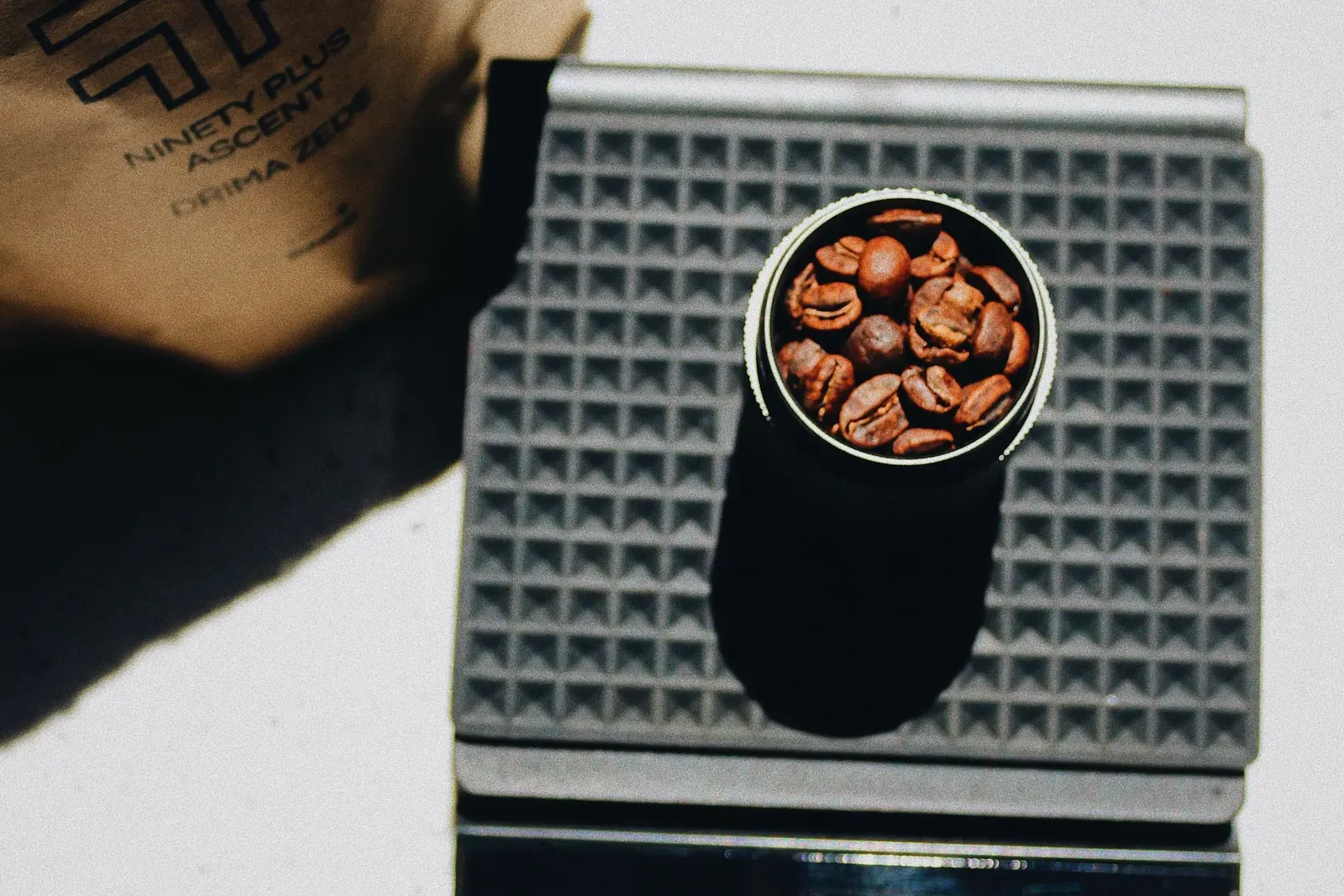
Most home baristas learn to dial in with the grinder, which is correct. But dose is the other lever, and it is often used badly: nudged up and down every morning alongside the grind until nobody knows which change did what. Here is how it actually behaves.
What a gram does
Add a gram to an 18 gram dose and three things happen at once.
Strength rises. More coffee for the same yield gives a more concentrated shot. If you keep the ratio by raising the yield too, the shot gets bigger rather than stronger.
Flow slows. A deeper bed of coffee resists water more, so the shot runs longer at the same grind. It acts a bit like grinding finer.
Headspace shrinks. The gap between the top of the puck and the shower screen gets smaller. Too little and the screen presses into the puck, leaving a dented, soupy puck and often channelling.
Take a gram away and you get the reverse: weaker, faster, more headspace. Too much headspace is less of a problem than too little, but a very underdosed basket can make a sloppy puck.
The basket sets the range
Baskets are made for a range. A double basket is typically designed for 16 to 20 grams; precision baskets are often stamped with a number such as 18 g or 20 g, meaning roughly plus or minus a gram. Dosing well outside that range is where most problems start. Our piece on baskets, gaskets and screens explains why basket shape matters.
The simple test: dose, tamp, lock in and remove the portafilter without brewing. If the screen has left a clear imprint on the puck, you are close to the limit.
Dose and ratio
Dose only means something alongside yield. 18 grams in and 36 out is a 1:2 ratio; 20 in and 36 out is 1:1.8, a shorter and stronger drink. Our brew ratio explainer covers the logic, and the ristretto base shows what happens when you push the ratio short on purpose.
Three useful moves:
- Same dose, change yield. Your main recipe tool for taste.
- Change dose and yield together. Keeps the character and makes a bigger or smaller drink, for a larger cup or a stronger milk drink.
- Change dose alone. Changes strength and flow at once. Use it on purpose, usually when grind has run out of range.
When to reach for dose
- Your grinder is at its finest setting and shots still run fast: add a gram.
- You want more coffee taste through a lot of milk: dose up and keep the yield.
- A new basket asks for a different amount.
- Headspace problems: a soupy or dented puck means dose down.
Otherwise, leave it alone and work with grind. Weigh every dose, which is easier if you single dose, and change one thing at a time. The flow of the shot, described in reading a shot by how it flows, will tell you whether the change went the way you expected.
Frequently asked
- Should I adjust dose or grind first?
- Grind. Pick a dose that suits your basket, keep it fixed, and dial in with grind and yield. Reach for dose only when grind alone cannot get you there, or when you deliberately want a stronger or weaker drink.
- Does a bigger dose mean more caffeine?
- Roughly in proportion, yes. More coffee in the basket, extracted to a similar degree, puts more caffeine in the cup. Our caffeine article gives the usual ranges.
Related reading
Reading a shot by how it flows
The first drops, the colour of the stream, where it blondes and how it ends: what an espresso tells you while it pours, before you taste it.
Robusta in an espresso blend
Ten to thirty per cent of the wrong species is what makes a Neapolitan espresso taste Neapolitan. Why it works, and how to judge a blend that uses it.
Volumetric, paddle or button
How a bar machine decides when to stop a shot, why volumetric dosing drifts, and what a paddle gives back to the person holding it.