Extraction
Reading a shot by how it flows
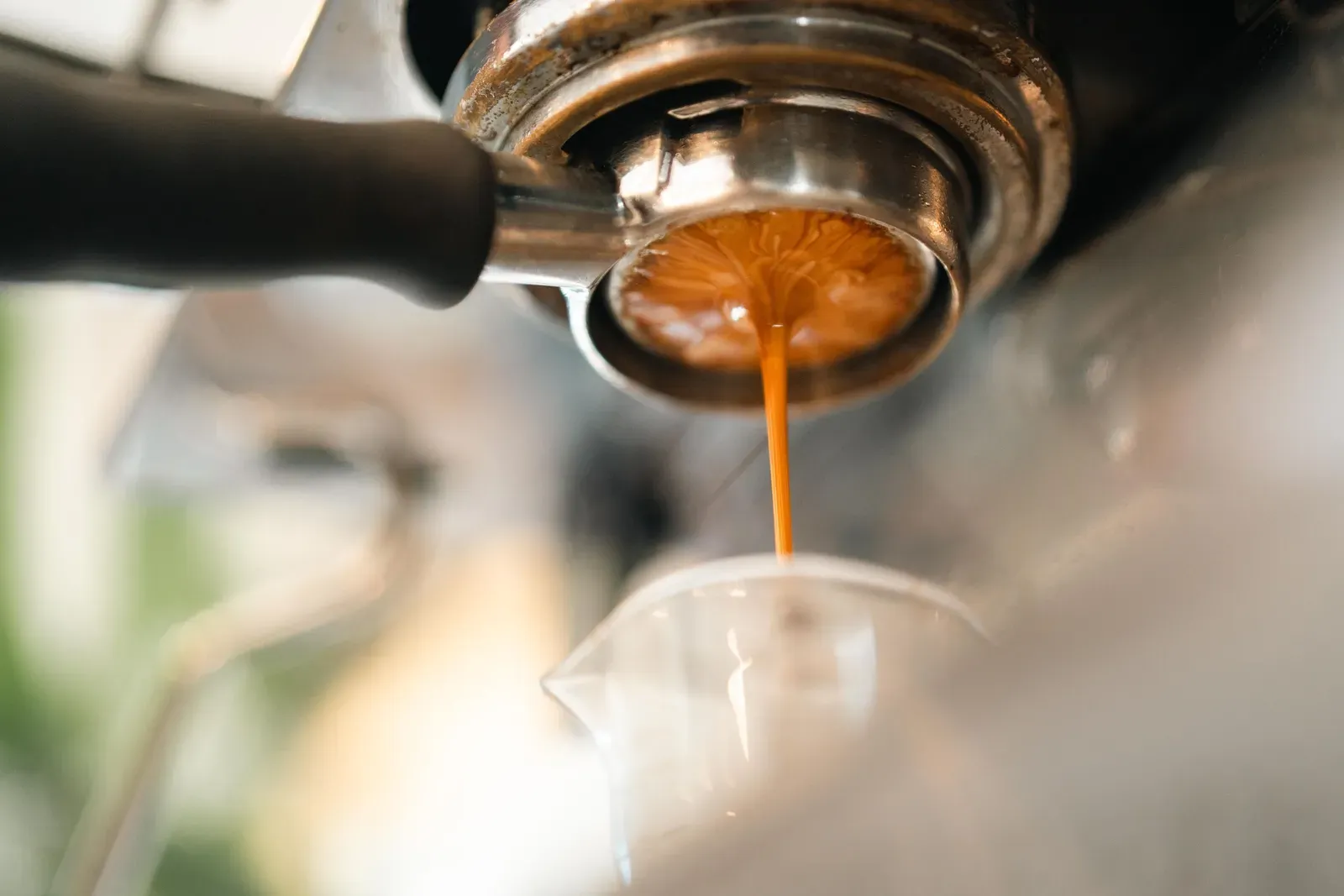
Experienced baristas often know whether a shot will taste right before it reaches the cup. It is not a talent. It is a list of things to watch, in order, for about thirty seconds. Here is that list.
Before the first drop
Start the timer when you press the button, not when coffee appears. On a machine with pre-infusion, the first few seconds are water soaking the puck, and that is normal.
First drops between 5 and 8 seconds on a standard machine is a good sign. Earlier usually means the grind is coarse or the puck has a weak point. Much later, over 12 seconds or so without pre-infusion, usually means the grind is too fine or the dose too high for the basket.
The body of the shot
Once it starts, a balanced shot pours as a steady, dark stream that looks like warm honey or a mouse tail: thin, continuous and slightly twisting. Colour runs from dark brown to hazelnut.
What to watch for:
- Spurts and sprays. Coffee jetting sideways from the basket is channelling: water has found a crack in the puck and is rushing through it. The cure is in puck prep and tamping, not in the grinder.
- A wandering stream. A stream that moves around, or two spouts pouring very unevenly, often means the puck is not level or the dose is not distributed.
- Drips that never join. A choked shot, almost always too fine or too much coffee.
- A gush. A thick, fast, pale stream from the start means far too coarse.
Blonding
Toward the end, the stream turns pale yellow and becomes thinner and faster. This is blonding: the easy-to-dissolve compounds are mostly gone and what is left is mostly water carrying bitterness.
When it happens is the useful part. Blonding at 15 seconds says the shot is running fast and will likely taste sour and thin. Blonding right at the end of a 28 second shot is ideal. Some baristas stop the shot when blonding starts. With modern light roasts, it is often better to let it run to your target weight and judge by taste.
With a bottomless portafilter
Without spouts, you see the underside of the basket. A good shot shows small dark spots appearing evenly across the base, merging into a single cone in the centre. Pale spots, holes that run blond early, or a ring that starts at one side all show you where the water went too easily. Our article on baskets, gaskets and screens covers the hardware side when the pattern never improves.
Then taste
The pour tells you where to look; the cup decides. Use the same weight out every time, so you are comparing like with like. Our brew ratio explainer covers why, and the espresso troubleshooting table maps each taste to a likely fix.
A practical order of changes: fix distribution and channelling first, then grind, then dose, then temperature. On a single boiler machine, make sure the temperature is consistent before you trust any of the above; our piece on temperature surfing explains how.
Frequently asked
- Do I need a bottomless portafilter to read a shot?
- No, but it helps. With spouts you can read timing, colour and the shape of the stream. A bottomless portafilter also shows you where in the basket the coffee comes from, which is how you spot channelling and uneven distribution.
- Is a 25 to 30 second shot always right?
- It is a starting window, not a rule. Light roasts often taste best a little longer, some modern recipes run 15 seconds at higher pressure, and a shot in the window can still taste wrong. Use time to compare shots of the same coffee, not to judge a single one.
Related reading
Fixing a moka pot: bitter, sputtering, leaking or weak
Most moka pot problems come from heat, grind, a tired gasket or a packed basket. Symptom by symptom, what is going wrong and how to fix it.
Moving the dose up and down
Changing the dose by a gram changes strength, flow and headspace all at once. When to reach for dose instead of grind, and how far to go.
Why your French press tastes muddy, and how to fix it
Silt, bitterness and a gritty last sip are not the price of a French press. Grind, steep, plunge and pour are the four places to fix it.