Buying guides
Choosing a filter grinder
A filter grinder is judged at the coarse end: even particles, few fines, steps where you brew. What that means for burrs, loading and budget.
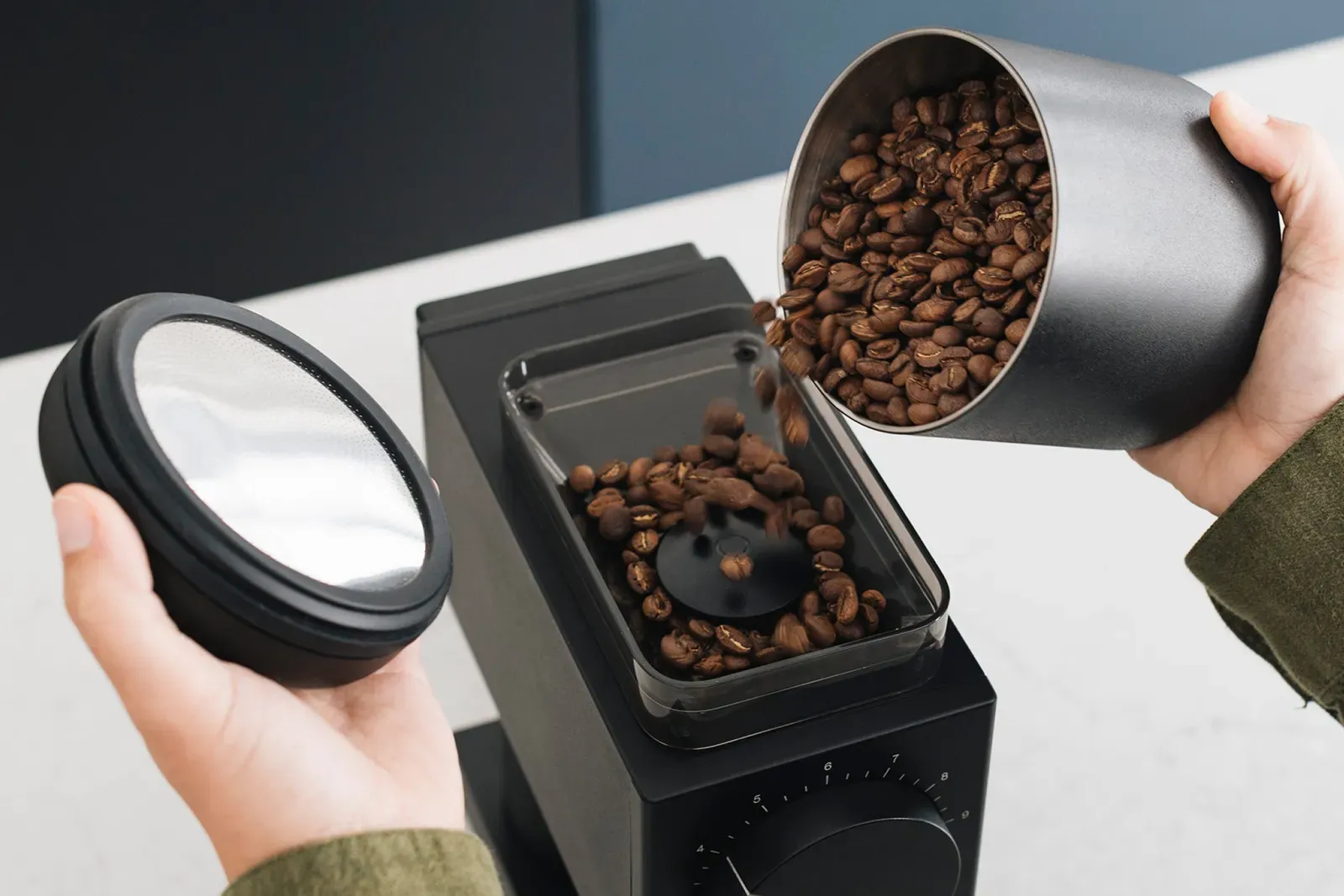
Featured
4 buying guides
Best first electric
Baratza
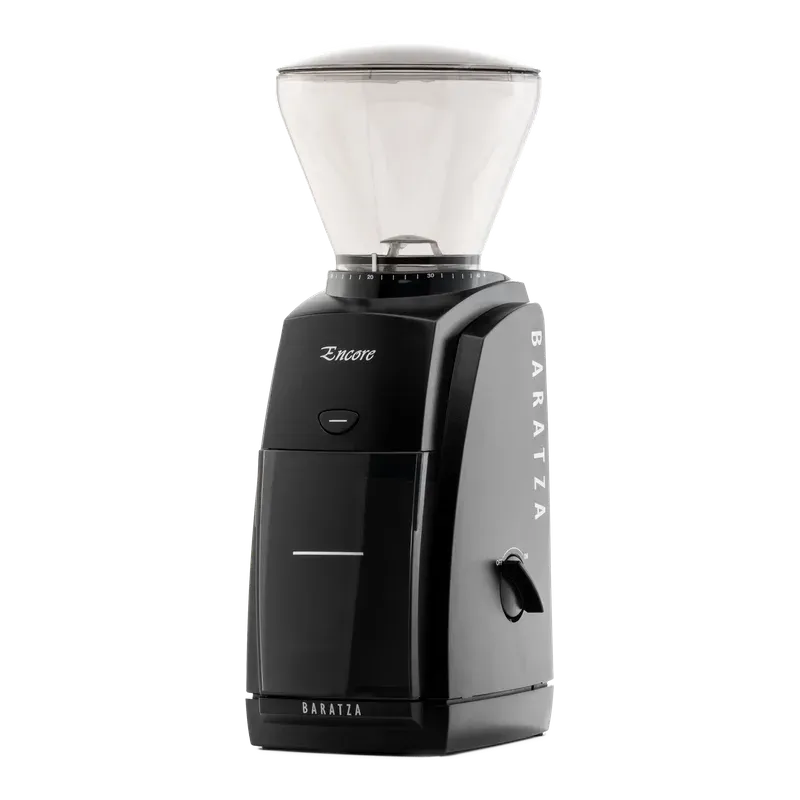
Baratza Encore
A DC motor, forty steps spread across the filter range and every part sold separately. It makes more fines than the dearer picks, and it is still the floor worth buying.
- Burrs
- 40 mm conical
- Steps
- 40
- Motor
- DC
- Built for
- Filter
Best for clarity
Fellow
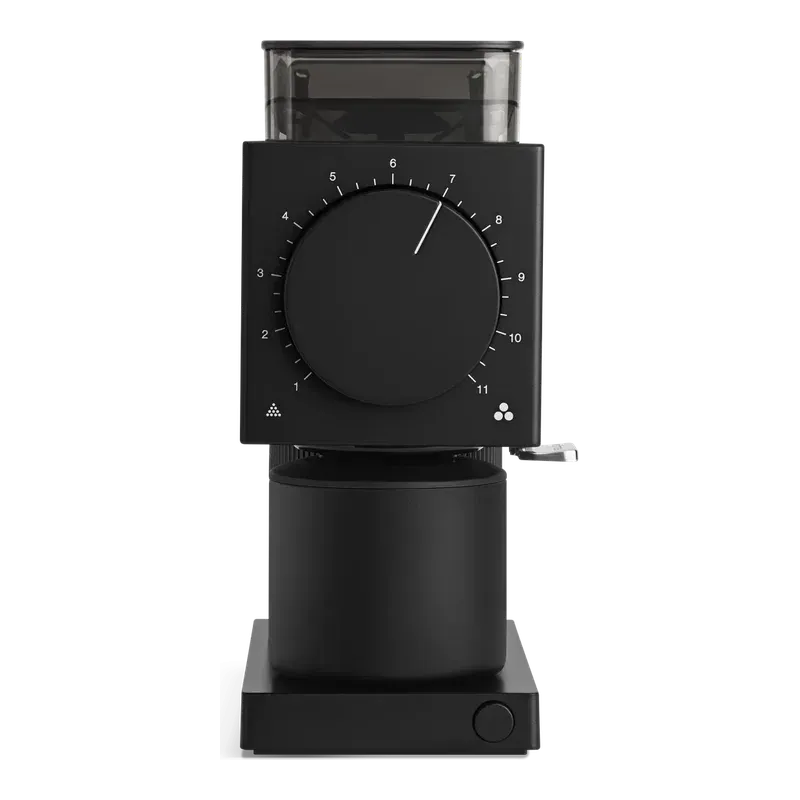
Fellow Ode Gen 2
64 mm flat burrs in a single-dose body built for filter and nothing else. The cleanest cup here, and no espresso at all.
- Burrs
- 64 mm flat
- Settings
- 31
- Range
- Filter to French press
- Loading
- Single dose
Best hand grinder for filter
1Zpresso
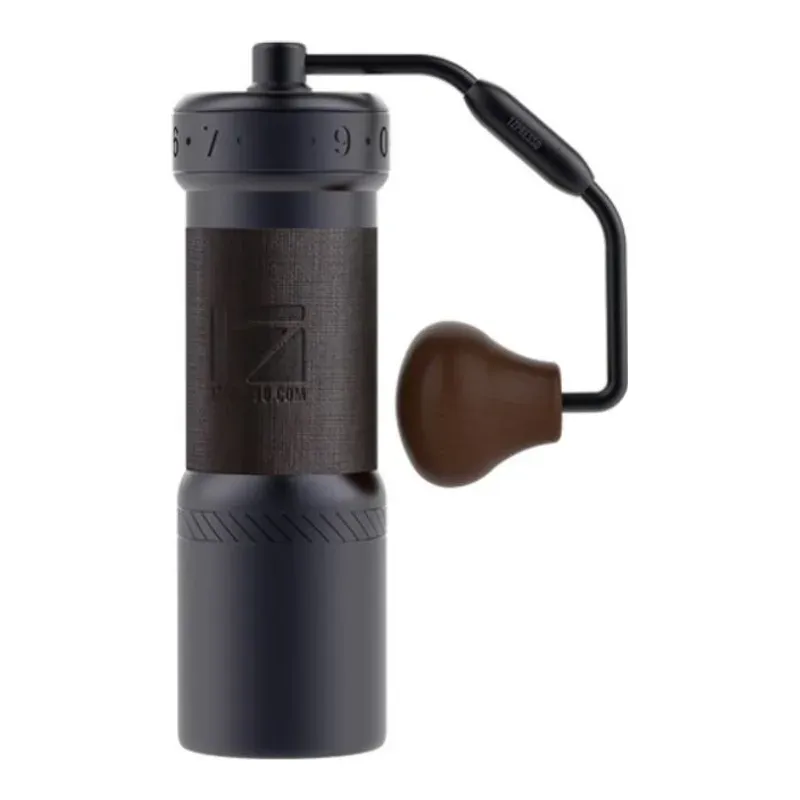
1Zpresso K-Ultra
Large conical burrs and an external numbered dial. Filter first, espresso if you ever need it.
- Burrs
- 48 mm conical, stainless steel
- Adjustment
- External dial
- Built for
- Filter, espresso possible
The one you keep
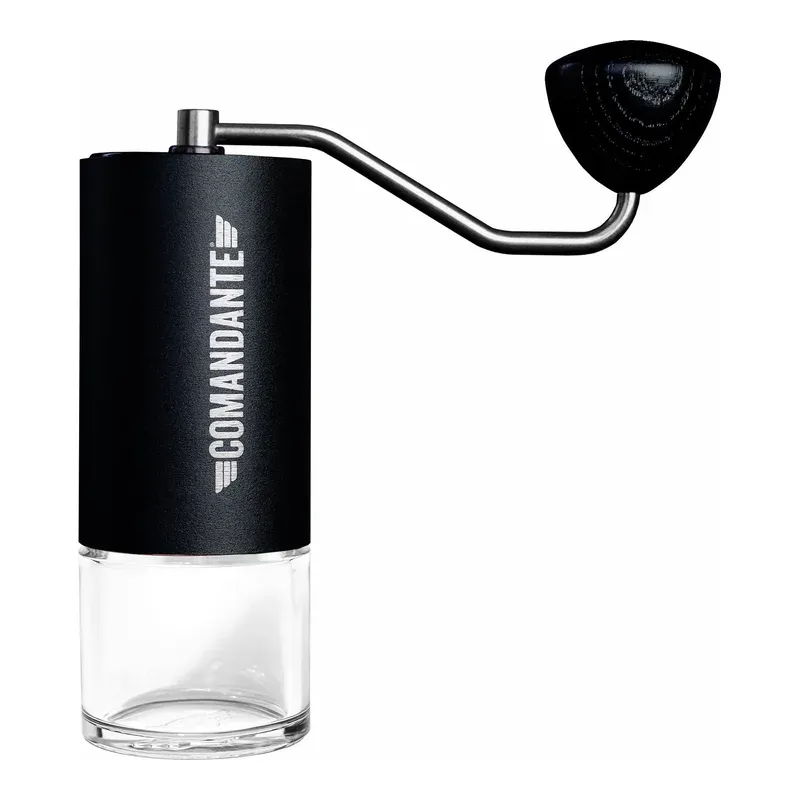
Comandante
Comandante C40 MK4
Smaller burrs than the K-Ultra and an internal click wheel, but the hand grinder most others are still measured against.
- Burrs
- 39 mm conical, Nitro Blade
- Adjustment
- Internal click wheel
- Built for
- Filter
What filter actually asks for
Espresso asks a grinder to go fine and to move in tiny steps. Filter asks something else. A V60, a Kalita or a French press brews at medium to coarse, and at those sizes the question is how many particles are the size you set, and how many are not.
The ones that are not come in two kinds. Fines are dust-sized fragments that extract in seconds and turn bitter. In a paper filter they also migrate down and clog it, which slows the drawdown and pushes the cup further towards bitter. Boulders are oversized chunks that barely extract and add sourness and a thin middle. A good filter grinder makes few of either. A poor one makes plenty of both, and you chase your tail: coarser to fix a slow drawdown, which adds boulders, finer to fix sourness, which adds fines. Grind size, explained properly has the full picture of the distribution.
So the spec that matters is the one nobody prints: how tight the distribution is at the setting you brew. Burr size, burr sharpness and alignment are the proxies. Range and step count come second, as long as there are enough usable steps between a pour over and a press.
Why an espresso grinder is often wasted here
Espresso grinders put their money at the fine end. Stepless collars, micro-steps, low retention at an 18 g dose, burrs shaped for a fine grind. On a pour over, the smallest change you will ever want moves the drawdown by ten or fifteen seconds. Almost any decent grinder offers that.
Some espresso grinders are also mediocre at the coarse end. Their burrs are cut to make the fines that hold an espresso puck together, and opened up for filter they keep making them. The cup comes out muddy and the drawdown runs long. Others simply run out of range before French press.
The rule is short. Filter only: buy a filter grinder and put the difference into beans. Both: accept a compromise in one direction, or own two grinders. Readjusting one grinder twice a day gets old in about a week. Choosing an espresso grinder covers the other side.
Flat or conical, for filter
The shape argument is louder than the difference. Still, at filter sizes the difference is easier to taste than at espresso.
Flat burrs tend to produce one narrower peak of particle sizes. The cup reads clean and separated: acidity in one place, sweetness in another. Conical burrs tend to produce two peaks, one of them fines, which reads as more body and a rounder, less defined cup.
Neither is a fault. A washed Ethiopian on a V60 gains from the flat. A natural in a Kalita, or anything in a press, is fine on a conical and may be better for it. On every grinder in this guide, alignment and burr condition matter more than shape. Conical or flat burrs explains why.
Single dose or hopper
A hopper grinder stores beans on top and grinds on demand. Convenient, and the wrong place to keep coffee. Beans in a clear hopper see light and air all day, and a hopper filled on Monday is tired by Friday. Some coffee also stays in the path and comes out with the next dose.
A single-dose grinder takes the 15 or 30 g you weighed, grinds all of it and stops. The bag stays sealed. Switching coffees costs nothing. For filter, where people often have two or three bags open, that is the better design. The price is one step: you weigh before you grind, every time. If you weigh anyway, and you should, it costs nothing.
A hopper grinder can be used the same way. Leave the hopper empty and pour in one weighed dose at a time.
What a blade grinder costs you
A blade grinder does not grind. It chops. Run time sets an average, and the particles spread widely around it: dust and quarter beans in the same dose. The dust overextracts, the quarters barely start, and the cup is bitter and sour at once. No recipe fixes that, because no setting reaches both ends.
Shaking it while it runs and pulsing in short bursts narrows the spread a little. It does not get close to burrs. A blade grinder costs about the same as an entry-level hand burr grinder, and the hand grinder wins by more than any upgrade above it. Hand grinders covers where the hand option stops making sense.
The four picks, by how you brew
Baratza Encore, about $149. The floor. A 40 mm conical burr, a DC motor, forty steps spread over the filter range and a parts catalogue that keeps old units running. It makes more fines than the other three. On a light roast in a V60 that shows as a slower drawdown and less separation. On a medium roast, a Kalita or a press, it is entirely adequate.
Fellow Ode Gen 2, about $345. 64 mm flat burrs, single dose, 31 settings from pour over to press, and no espresso. The burrs are the reason to buy it: nothing else in an electric body at this price is as clean on filter. Two trades. The design carries part of the price, and it will never pull a shot. If espresso is likely within a year, do not buy it.
1Zpresso K-Ultra, about $209. A hand grinder with 48 mm conical burrs and an external dial with numbers on it, so a setting is something you read rather than count. For one or two cups a day it matches electrics that cost much more, and it reaches espresso if you need it. Expect well under a minute of turning for a single cup.
Comandante C40 MK4, about $289. Smaller 39 mm burrs, adjusted by an internal click wheel under the burr, so you count clicks from closed. Its steps are wide for espresso and well spaced for filter. Built to last decades, which is the only way the price makes sense.
Reading the budget
| Budget | What you get | What you give up |
|---|---|---|
| Under $150 | An entry-level hand burr grinder | Speed, and some evenness at the coarse end |
| Around $150 | Conical electric, DC motor, hopper | Clarity on light roasts |
| $200–300 | Premium hand grinders | Speed, and big batches |
| Around $350 | Large flat burrs, single dose, electric | Espresso, entirely |
The middle rows are the real choice. At filter sizes a $200 hand grinder competes with a $350 electric. What decides it is volume. One cup a day: hand. A Chemex for four every morning: electric.
Before you buy
Two checks. If your current burr grinder has started to need finer settings for the same drawdown, it may need cleaning or new burrs rather than replacing, and grinder care costs a fraction of the cheapest pick here.
Then settle the brewer. A V60 shows grind quality more than any other dripper, because flow is set by the grind and the pour alone. A French press hides most of it. Once the grinder is on the counter, grind settings by method gives the starting points.
Frequently asked
- Can a filter grinder make espresso?
- Mostly not. The Ode Gen 2 does not go fine enough and is not sold for it. A hand grinder like the K-Ultra can reach espresso, but its steps are spaced for filter, so dialling in a shot takes patience. If espresso is the plan, buy for espresso.
- Is a hand grinder good enough for filter?
- Yes, and at the same price it is usually better than an electric. The limit is volume: one or two cups a day is easy, a litre of Chemex for four people every morning is not.
- Flat or conical burrs for pour over?
- Flat if you mostly brew light, washed coffees on a V60 and want them separated and clear. Conical if you like body and brew a mix of methods. Burr condition and alignment matter more than shape on any grinder in this range.