Chemex
Why a Chemex makes a cleaner cup
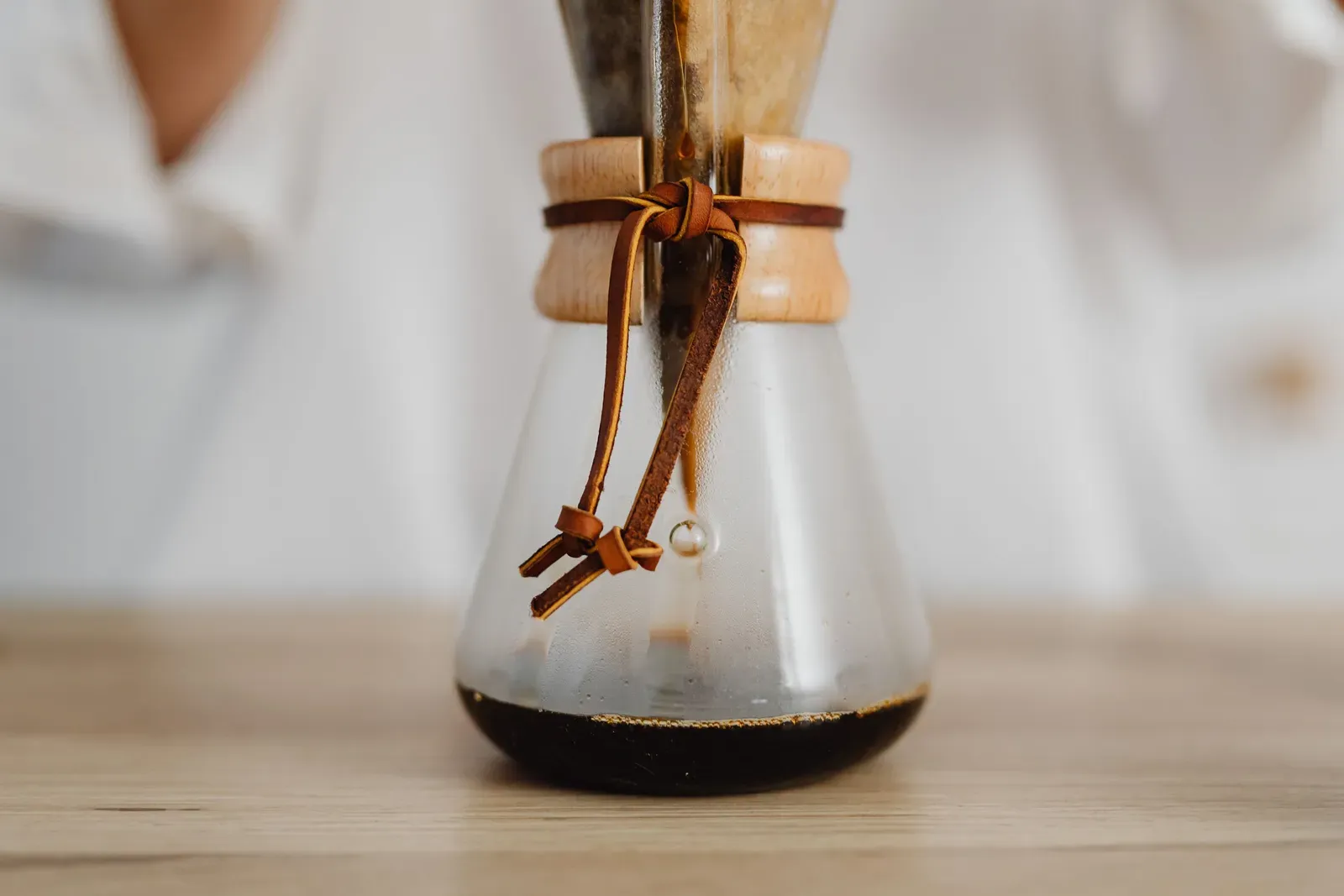
People who switch from a cone dripper to a Chemex usually say the same thing: the coffee is cleaner. Lighter in body, brighter, with nothing at the bottom of the cup. It is not the shape of the glass. It is mostly the paper.
Reason 1: the paper
Chemex filters are bonded paper, noticeably thicker and heavier than the filters used in most cone brewers, on the order of 20 to 30 per cent more paper by weight. They are folded so that three layers sit against the spout side of the glass.
Thick paper catches more of two things:
- Oils. Coffee oils carry body and a lot of the heavy, chocolatey impression in a cup. Paper absorbs them; a metal filter lets them through.
- Fines. The smallest particles from the grinder. In the cup they read as silt, haze and a bitter finish.
Take both out and what remains is the dissolved part of the coffee: acids, sugars and aromatics. Our comparison of filter papers, cloth and metal shows the same effect across materials.
Reason 2: one exit and a slow drawdown
A Chemex has no ribs and no large hole at the bottom. Water leaves through the paper and down a single channel by the spout, and the thick paper slows that exit. The result is a longer contact time than a V60 at the same grind.
That is why a Chemex wants a coarser grind, roughly medium to medium-coarse. Use a V60 setting and you will get a 6 minute drawdown and a bitter cup; our page on why a pour over drains slowly covers the fix.
Reason 3: volume
A Chemex is usually brewed for two to four cups, 30 to 50 g of coffee. A deeper bed spread over a wide cone filters itself: the coffee bed acts as an extra layer that catches fines before the paper does. Small doses in a large Chemex tend to run fast and taste thinner.
When clean is not what you want
Clarity is a style, not an improvement. If you like the body of a French press or the weight of a moka pot, a Chemex will feel thin. That is the paper doing its job. Our article on immersion against percolation places the Chemex at the clean end of a whole spectrum of brewers.
Where it shines is with coffees that have something to show: washed Ethiopian and Kenyan lots, light roasts, delicate naturals. Our light roast explainer covers why these suit filter.
Getting it right
- Rinse the paper well with hot water and discard it.
- Grind medium to medium-coarse; adjust by drawdown time, aiming for 4 to 5 minutes for 40 g.
- Bloom with about twice the coffee weight in water for 30 to 45 seconds.
- Pour in steady stages, keeping the water level below the top of the paper. Our guide to pouring: spiral, centre, pulses explains the options.
The Chemex method page has the full recipe, and our pour over kit guide covers the kettle and scale that make it repeatable.
Frequently asked
- Can I use other filters in a Chemex?
- Cone papers sized for it exist, and so do metal and cloth filters. They change the cup: metal lets oils and fines through and gives more body; cloth sits between metal and the Chemex paper. The clean Chemex cup comes from its own bonded paper.
- Should I rinse a Chemex filter?
- Yes. The paper is thick enough to give a papery taste if you do not, and rinsing also warms the glass. Pour the rinse water out through the spout before adding coffee.
Related reading
A grinder for filter only
If you never make espresso, a grinder built only for filter is cheaper, faster and often better in the cup. What to look for, and what you can ignore.
Cold drip is not cold brew
Both use cold water and both take hours, but one drips and one soaks. How cold drip and cold brew differ in method, taste and effort, and which to make at home.
Immersion against percolation
Every brewer either soaks coffee in water or runs water through it. How the two families extract, why they taste different, and where each brewer sits.