Filter grinders
A grinder for filter only
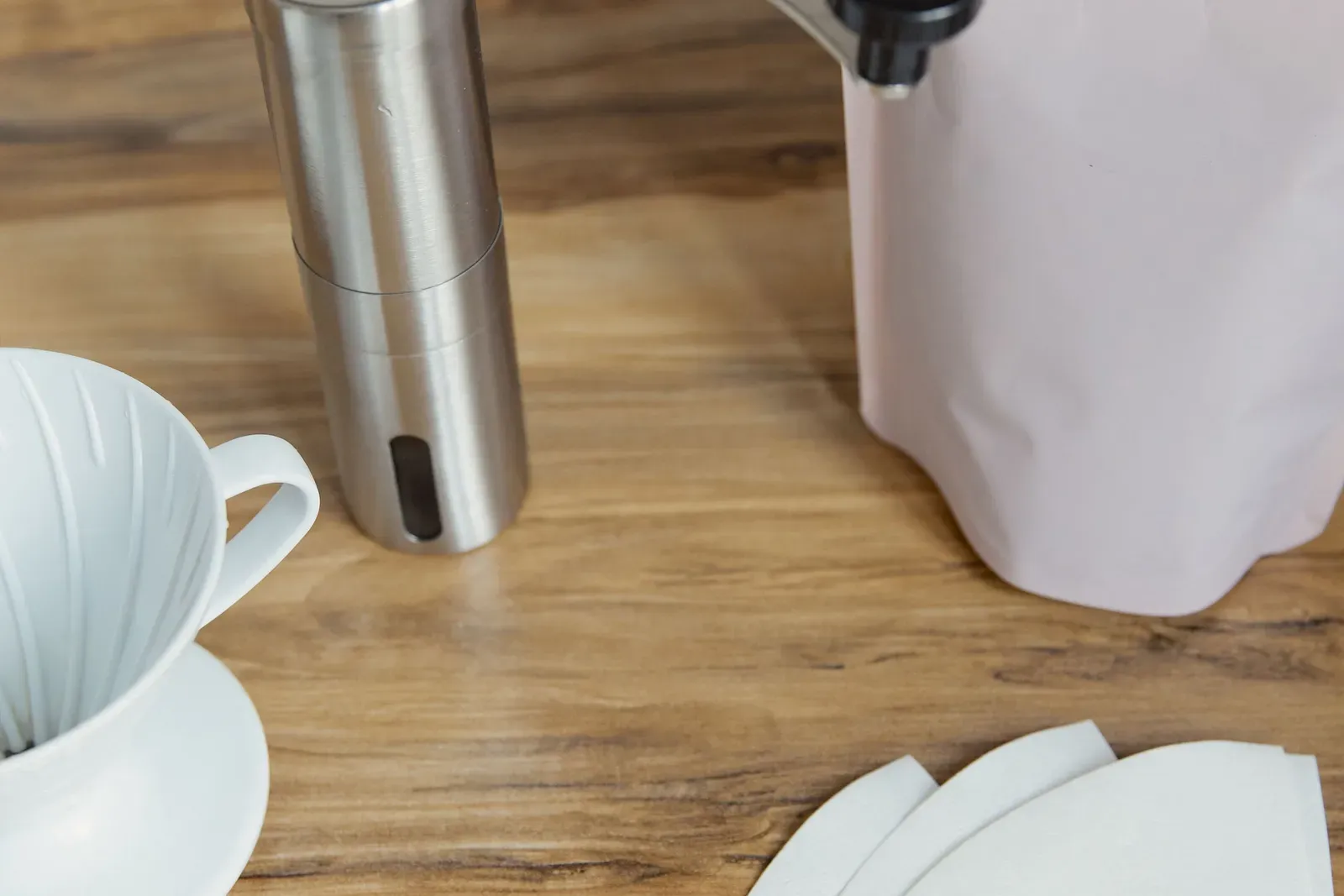
Most grinders are sold on how fine they can go. That is an espresso conversation. If your coffee is made with a V60, a Chemex, a French press or a batch brewer, almost everything the marketing talks about is beside the point.
What filter actually asks for
Filter brewing works in the middle of the range: medium-fine for a cone dripper, medium for a flat bottom brewer, coarse for immersion. Our table of grind settings by method gives the starting points.
At those settings, what matters is how evenly the burrs cut. A grinder that produces a lot of fines (the dust well below your target size) does three things to a pour over. The fines migrate down and clog the filter, so the drawdown slows. They extract far faster than the rest, adding bitterness. And they cloud the cup, blurring the flavours you paid for in a good light roast.
So the specification that matters is consistency at medium settings. Fine steps at the bottom of the dial do not.
Why “does both” often means “does one”
A burr set has a geometry, and that geometry is tuned for a range. Burrs built for espresso are designed to crush finely and evenly near the bottom of their travel. Opened up to filter settings, many of them still produce a fair share of fines, which gives a heavier, rounder cup than you might want from a washed Ethiopian.
Grinders sold as all-rounders often solve this by being average at both ends. If you know you will never pull a shot, there is no reason to pay for a range you will not use.
Hand or electric
For one or two cups a day, a hand grinder is the best value in filter coffee. Filter settings grind quickly by hand, twenty seconds or so for a single cup, and a 100 euro hand grinder with steel burrs and two bearings beats most electrics at twice the price. The anatomy of a hand grinder explains what to check.
An electric earns its price when you brew for several people, brew a litre for the day, or simply do not want to crank. Look for flat or large conical burrs, a motor that does not slow down under load, low retention and a clear numbered dial. Our guide to choosing a filter grinder compares the two routes in detail.
What you can ignore
- Stepless adjustment. Nice to have, not needed. Filter tolerates steps of around 30 to 50 microns without trouble.
- Grind by weight or timed dosing. You will weigh the beans anyway, on the scale you already use to pour.
- Espresso accessories. Portafilter forks and dosing cups add cost for nothing.
What you should not ignore
- Burr quality. Steel, machined, ideally a known burr set.
- Alignment. Two bearings on a hand grinder, a stiff burr carrier on an electric.
- Static. Some electrics spray chaff and grounds across the counter. A few drops of water on the beans before grinding helps, but a grinder that needs it every time is tiring.
Where to go next
If you are building a kit from scratch, our pour over kit guide puts the grinder in context with kettle, scale and brewer, and filter papers, cloth and metal covers the other half of what decides clarity in the cup.
Frequently asked
- Can I use an espresso grinder for pour over?
- You can, and many people do, but espresso burrs are often tuned for the fine end and produce more fines at filter settings. The cup tends to be heavier and slightly muddier than from a grinder made for filter.
- How much should I spend on a filter grinder?
- A good hand grinder for filter starts around 60 to 100 euros. A good electric starts around 150 euros. Below that, burr quality and alignment drop quickly and the cup shows it.
Related reading
Anatomy of a hand grinder
Burrs, shaft, bearings, adjustment ring and catch cup: what each part of a hand grinder does, and which ones decide whether it is worth the money.
Immersion against percolation
Every brewer either soaks coffee in water or runs water through it. How the two families extract, why they taste different, and where each brewer sits.
Pouring: spiral, centre or pulses
How you pour over coffee changes agitation, bed height and drawdown. The three main pouring styles, what each one does, and which to use with your brewer.