Buying guides
Your first espresso machine under $500
Three machines under $500 and three different trades: the Gaggia to learn on, the Bambino Plus for milk, the Dedica to start. Plus the grinder you need.
Featured
3 buying guides
Best to learn the craft on
Gaggia
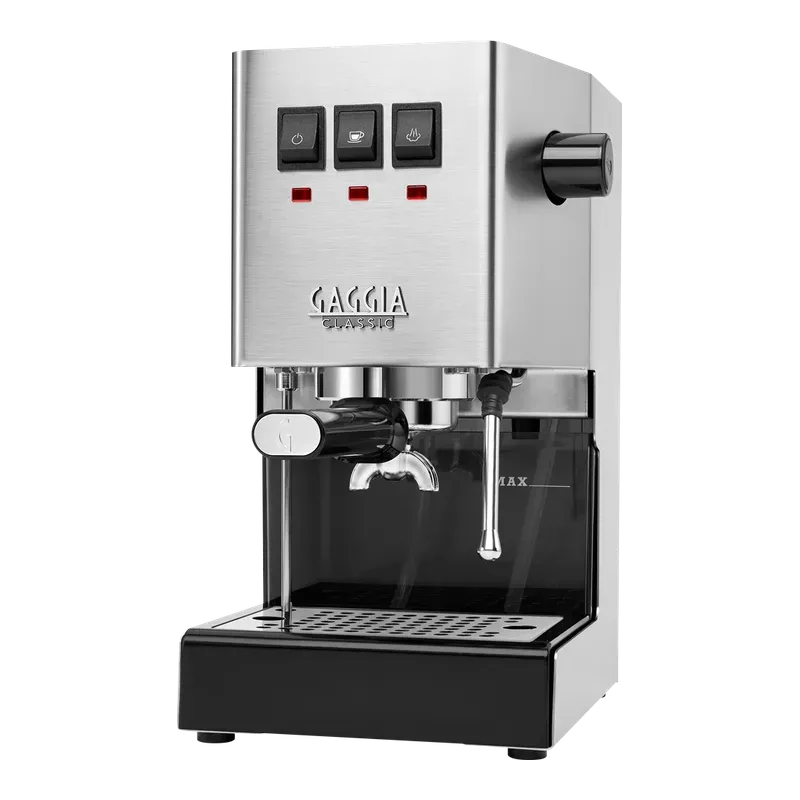
Gaggia Classic Evo Pro
A commercial 58 mm portafilter and a three-way solenoid at a home price. No PID and a slow single boiler, so it teaches you temperature whether you like it or not.
- Type
- Single boiler
- Group
- 58 mm, commercial style
- Valve
- Three-way solenoid
- Tank
- 2.1 L
Best for milk drinks
Sage
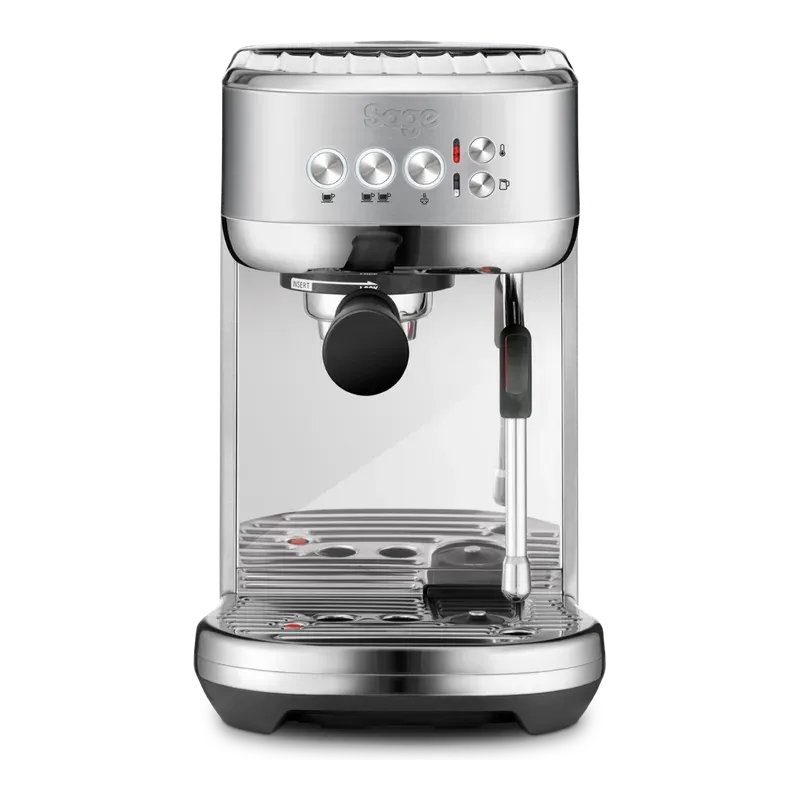
Sage Bambino Plus
Ready in seconds, PID-controlled, and the automatic wand textures the milk for you. The 54 mm basket is the price of all that convenience.
- Type
- ThermoJet, PID
- Portafilter
- 54 mm
- Steam
- Automatic wand
- Tank
- 1.9 L
Best way to start
De'Longhi
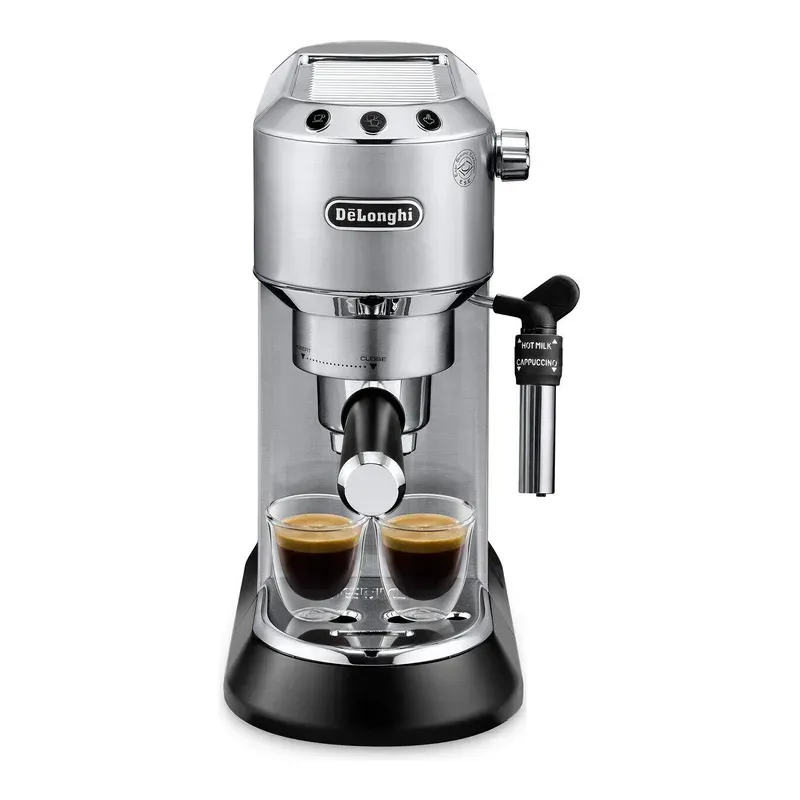
De'Longhi Dedica EC685
The cheapest real pump machine worth buying and only 15 cm wide. Swap the pressurised basket once you have a proper grinder.
- Type
- Single boiler, thermoblock
- Portafilter
- 51 mm, pressurised
- Width
- 15 cm
- Tank
- 1.1 L
Ask anyone behind a café counter which espresso machine to buy for five hundred dollars and the good ones answer with a question, which tends to annoy: what are you going to grind with? Almost nobody has thought about it, and it is the question that decides whether the next six months are a pleasure or a slow argument with a machine that is doing exactly what it was told.
So this guide does two things. It sets out what the budget really has to cover, and then it explains the three machines we would point a first buyer to, which are not three steps on one ladder but three different trades.
The grinder is part of the budget
Espresso needs a grind fine enough and adjustable in steps small enough to move a shot by a few seconds. A filter grinder does not get there, a blade grinder cannot, and pre-ground coffee is ground for a machine that is not yours, on a day that is not today. The machine cannot fix any of that, because the fault is in the bed of coffee the water has to pass through.
That is why the grinder guide and this one are really one decision. Read the price of a machine as half a setup:
| Setup | Machine | Grinder | Rough total |
|---|---|---|---|
| The lean start | Dedica, about $199 | Espresso-capable hand grinder or entry electric, about $200 | About $400 |
| The milk drinker | Bambino Plus, about $499 | Entry espresso electric, about $200 | About $700 |
| The learner | Gaggia Classic Evo Pro, about $499 | Entry espresso electric, about $200 | About $700 |
If five hundred is the whole budget, the honest answer is the first row. If five hundred is the machine budget, plan for the grinder on top, and for scales and a proper tamper after that. Choosing an espresso grinder explains what the grinder money should buy.
The Gaggia Classic Evo Pro: the one you learn on
The Classic has been sold in one form or another since 1991, and the reason it lasts is the portafilter. It is 58 mm, the size café machines use, so every basket, tamper, dosing ring and shower screen made for professionals fits it. Behind the group sits a three-way solenoid valve, which vents the pressure off the puck when the shot ends. The puck comes out drier, the portafilter does not spit when you unlock it, and you can pull a second shot straight away.
What it does not have is temperature control beyond a thermostat. The single boiler swings around its target, and it has to be switched up to steam temperature and back down again between a shot and a milk drink. In practice that means a routine: let it warm properly (the ready light comes on well before the group is hot), flush a little water before the shot, and wait for steam afterwards. What a PID actually changes explains what you are doing by hand. Many owners end up adding a PID kit, and the Classic is one of the few machines where that is a well-trodden path rather than an adventure.
Who it suits: someone who mostly drinks espresso or one milk drink at a time, who wants to understand the shot rather than have it made for them, and who enjoys the idea of keeping a machine for a decade and fixing it themselves.
The Sage Bambino Plus: the one for milk drinks
Sage is Breville’s name in the UK and Europe, so in the US this machine is the Breville Bambino Plus. It works on the opposite philosophy to the Gaggia. The ThermoJet heater is ready in a few seconds, a PID holds the brew temperature, and low-pressure pre-infusion wets the puck before full pressure arrives, which forgives a bed that is a little uneven.
The headline is the steam wand. It reads the temperature of the milk and stops on its own, with a choice of temperature and foam thickness, so a beginner gets a correctly heated, textured jug without learning the sound of a stretching milk. You can still steam manually when you want to. For a household that drinks lattes and flat whites, this removes the step where most first machines are abandoned.
The trade is the 54 mm basket. It is Sage’s own size, so the choice of aftermarket baskets and tampers is narrower, and the machine is a closed design that is repaired by a specialist rather than on the kitchen table. The included accessories are serviceable; a tamper that fits the basket properly is the first upgrade.
Who it suits: milk drinkers, short mornings, small kitchens, and households where more than one person will use the machine and not all of them want to learn.
The De’Longhi Dedica EC685: the one that starts you off
The Dedica is about $199 and 15 cm wide, which makes it the cheapest pump machine we would recommend and one of the narrowest. It heats with a thermoblock, comes with pressurised 51 mm baskets and has a basic steam wand with a frothing sleeve.
The pressurised basket is both its strength and its ceiling. It builds pressure in the basket itself, so stale or pre-ground coffee still produces something that looks like crema. That is forgiving on day one and useless by week three, because it hides exactly the feedback you need to learn. With a grinder and a non-pressurised aftermarket basket, the same machine becomes a real, if temperamental, espresso machine. Take the sleeve off the wand too, and the milk improves.
Compact espresso machines covers what a narrow footprint really costs, and the grinder or machine comparison shows what happens when the Dedica is paired with a proper grinder.
Who it suits: someone testing whether espresso is for them, on a tight budget or in a tight kitchen, who would rather spend the difference on the grinder and accept that the machine will be replaced one day.
The three side by side
| Gaggia Classic Evo Pro | Sage Bambino Plus | De’Longhi Dedica EC685 | |
|---|---|---|---|
| Price | About $499 | About $499 | About $199 |
| Basket | 58 mm, commercial | 54 mm, Sage size | 51 mm, pressurised |
| Heating | Single boiler | ThermoJet | Thermoblock |
| Temperature control | Thermostat | PID | Basic |
| Milk | Manual wand, wait for steam | Automatic or manual wand, fast | Wand with frothing sleeve |
| Room to grow | Large | Small | Small |
None of the three can brew and steam at the same time. That takes a heat exchanger or a second boiler, which is a different budget, explained in single boiler, heat exchanger or dual boiler.
How to choose in one minute
If you drink milk most mornings, buy the Bambino Plus. If you drink espresso and want to understand it, buy the Gaggia. If you are not yet sure you will still be doing this in six months, buy the Dedica and spend the difference on the grinder. And if the budget will not stretch to a new machine plus a grinder, a used machine is a sound route, especially for the Gaggia, which ages well and is easy to check.
Expect the first weeks to be spent dialling in whichever one you choose. That is the hobby, not a sign you bought the wrong machine.
Frequently asked
- Can I use pre-ground coffee with these machines?
- With the Dedica and the Bambino Plus, yes, through their pressurised baskets, and the result is drinkable. With the Gaggia, which is built around a proper basket, pre-ground coffee runs fast and sour. In all three cases a grinder is what turns the machine into an espresso machine.
- Which of the three is best for a latte or a flat white?
- The Bambino Plus. It heats for steam in seconds, and its automatic wand textures the milk and stops at a set temperature, which removes the hardest part of a milk drink for a beginner.
- Is the Gaggia Classic Evo Pro worth it without a PID?
- Yes, if you want to learn. The temperature moves more than on a controlled machine, but the routine to manage it is simple and becomes habit within a week, and a PID can be added later.