Buying guides
Choosing an espresso machine: the five questions
Five questions to answer before you look at a single model: milk, involvement, boiler, space and water, and the real budget once the grinder is counted.
Featured
4 buying guides
Milk, little fuss
Sage
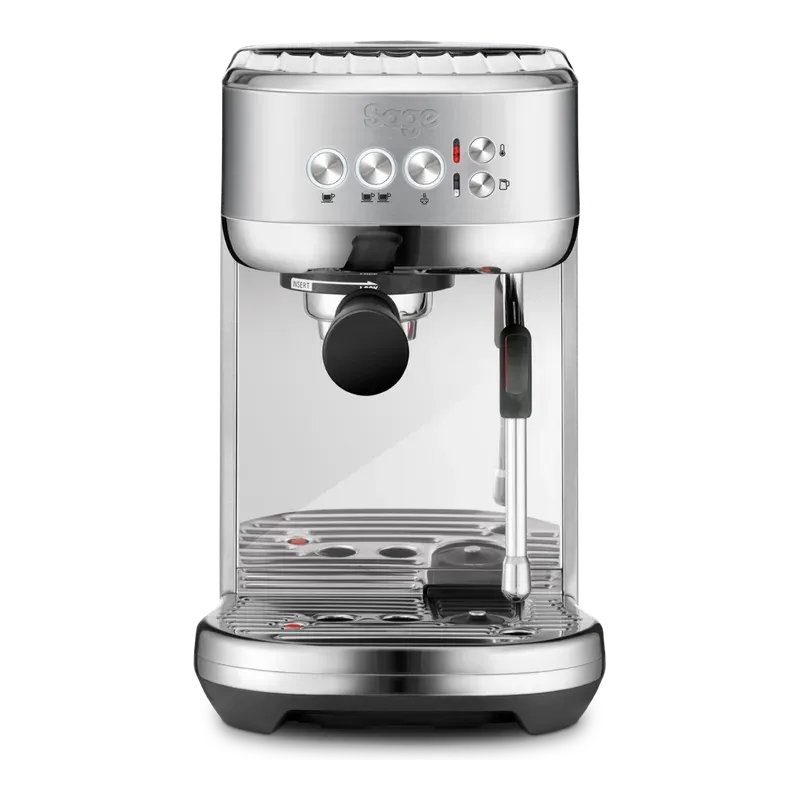
Sage Bambino Plus
For the answers 'milk most days, one or two drinks, no time to learn the wand'. Ready in seconds, and the automatic wand does the texturing.
- Type
- ThermoJet, PID
- Portafilter
- 54 mm
- Steam
- Automatic wand
- Tank
- 1.9 L
Hands on, small budget
Gaggia
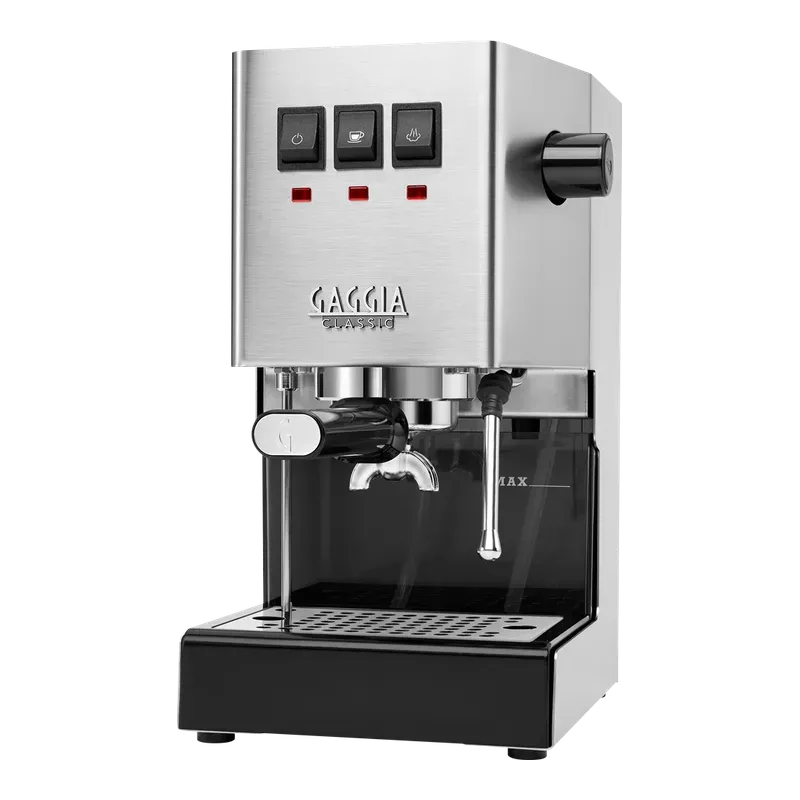
Gaggia Classic Evo Pro
For the answers 'mostly espresso, happy to learn, room to grow'. A commercial 58 mm basket and a single boiler that teaches you temperature.
- Type
- Single boiler
- Group
- 58 mm, commercial style
- Valve
- Three-way solenoid
- Tank
- 2.1 L
Milk for a queue
La Marzocco
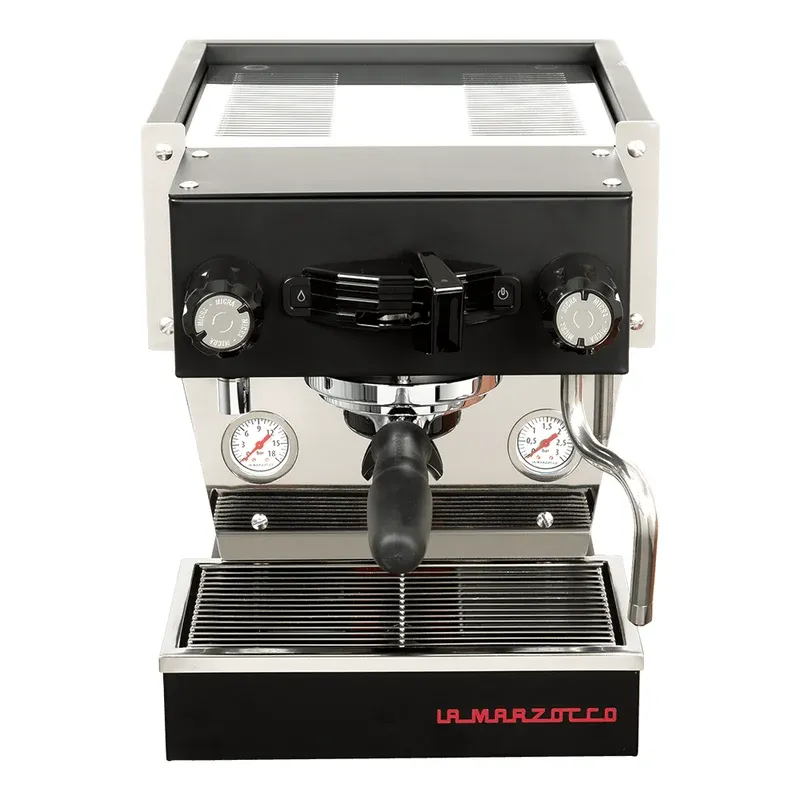
La Marzocco Linea Micra
For the answers 'several milk drinks in a row, every day, for years'. Two boilers, steam on demand, and the option to plumb it in.
- Type
- Dual boiler, PID
- Boilers
- 0.25 L coffee, 1.6 L steam
- Tank
- 2 L, plumbable
- Weight
- 19 kg
One button
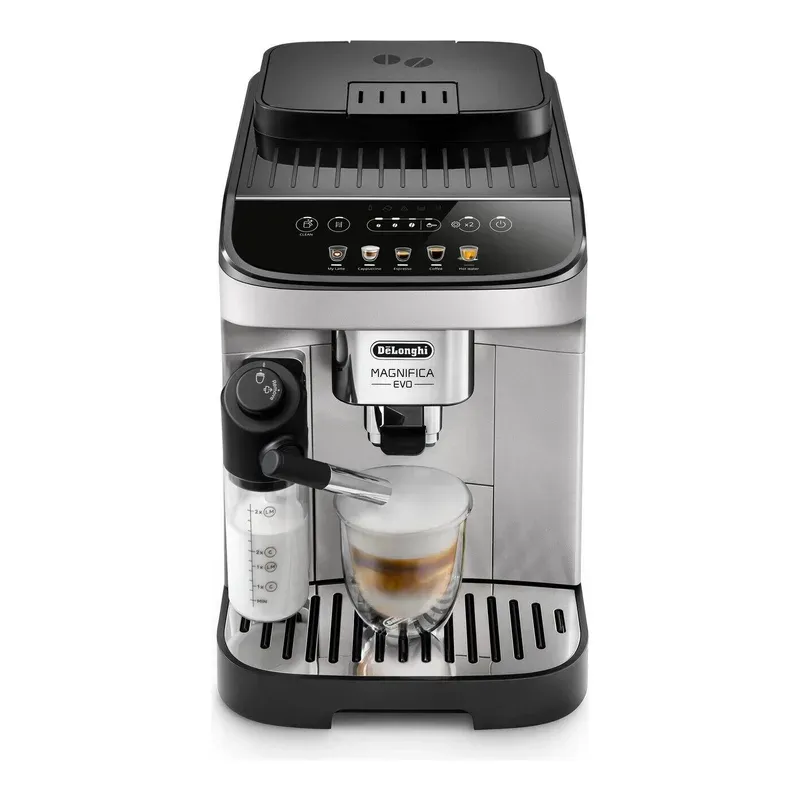
De'Longhi
De'Longhi Magnifica Evo
For the answers 'good coffee, no involvement at all'. It grinds, doses, brews and froths, and asks for regular cleaning in return.
- Type
- Bean-to-cup
- Grinder
- 13-setting steel conical
- Milk
- LatteCrema automatic
- Tank
- 1.8 L
Most espresso machines are bought the wrong way round. Somebody picks a model they have seen in a café or a video, then spends six months discovering what they actually wanted: faster mornings, better milk, less cleaning, or simply a machine that fits under the cupboard. This guide does not rank anything. Our espresso machine picks do that. It asks five questions, in the order that narrows the field fastest, and by the end most of the market has ruled itself out.
1. Milk, and how many in a row?
This is the question that decides the most, and people answer it too vaguely. “I drink lattes” is not the answer. The answer is how many milk drinks you make one after another on a normal morning.
Steaming takes far more heat than brewing. A machine that can do one or two milk drinks with a short pause can still be a slog at four, because it has to recover between each jug. If you make espresso alone, steam barely matters and your money should go into temperature stability instead. If you make one flat white a day, almost any machine with a decent wand will do. If you make three cappuccinos for a household every morning, steam power and the ability to steam while the shot is running are worth paying for.
Be honest about weekends, too. A machine chosen for your Tuesday will be the one you serve guests from on a Sunday.
2. How much of the job do you want to do?
There are three broad answers, and they lead to different shops.
All of it. A semi-automatic machine with a separate grinder: you grind, dose, tamp, start and stop the shot, and steam the milk. This is where the best espresso at home comes from, and also where the learning curve is. A manual lever machine goes one step further and hands you the pressure as well.
Some of it. The same machine with help: programmed shot volumes, automatic milk wands, built-in grinders. Automatic or semi-automatic explains which variable each kind of help takes away, and it is a smaller decision than the shop floor suggests.
None of it. A bean-to-cup machine grinds, doses, tamps and brews at the press of a button, and many froth the milk too. The coffee is good rather than great, and the machine asks for regular cleaning in return. Bean to cup machines, explained covers that bargain honestly.
If the answer is “none of it” and the drink is mostly black, a capsule machine belongs on the list as well. It is not an espresso machine in the sense this guide means, but it may be the machine you will actually use.
3. Which boiler follows from the first two answers?
Only now does the inside of the machine matter, and the first two answers have usually chosen it already. Single boiler, heat exchanger or dual boiler has the full mechanics; here is the short version.
| Heating | Ready in | Brew and steam at once | Typical price |
|---|---|---|---|
| Thermoblock or ThermoJet | Seconds to a minute | No, but switches fast | $150–500 |
| Single boiler | About ten minutes | No, wait to switch | $250–600 |
| Heat exchanger | Longer | Yes | $600–1,200 |
| Dual boiler | Longest, unless built for fast warm-up | Yes, at two set temperatures | $1,200 and up |
Read it against question one. Espresso only: a single boiler with a PID or a fast-heating machine is enough, and what a PID actually changes tells you whether you need the PID. One or two milk drinks: the same, accepting a pause. A queue of milk drinks: heat exchanger or dual boiler, and nothing below them will feel right.
4. Where will it live, and what water will it drink?
Two physical questions that rule out more machines than any specification.
Space. Measure the height under your wall cupboards, then add the room you need to lift the lid and fill a top-loading tank. Check that the drip tray can come out without moving the machine, and that there is room beside it for a grinder, which is usually taller than people expect. A narrow worktop is not a reason to give up espresso: compact machines are a different set of compromises rather than worse ones.
Water. Scale kills more home machines than anything else, and how fast it builds depends on your tap rather than on the calendar. Test your water before buying. On a hard supply, budget for a filter jug or an in-tank filter, and look for a machine whose descaling is straightforward; descaling is a job you will do. Some machines at the top end can be plumbed into the mains, which removes the tank and, with a softener, most of the scale question. It also needs a water point and a drain nearby, which a commercial machine at home goes through.
5. What is the whole budget?
The price of the machine is not the price of the setup, unless you are buying a bean-to-cup machine, which includes its own grinder. For everything else, the list looks like this:
| Item | Why you need it | Rough cost |
|---|---|---|
| Espresso-capable grinder | The machine cannot correct a bad bed of coffee | $200–450 |
| Scales reading 0.1 g | Dose and yield are the two numbers you adjust against | $20–60 |
| Tamper matched to the basket | Leaves no loose ring for water to escape down | $20–80 |
| Milk jug | A defined spout controls the pour | $15–30 |
| Water filter, if your water is hard | Protects the boiler | $20–50 |
On a first setup those lines can add up to as much as the machine itself. The grinder is the one not to economise on: the grinder guide and choosing an espresso grinder explain why, and the barista kit worth buying sorts the rest into useful and decorative.
Reading your answers
The four machines above are not a ranking. Each one is what a common set of answers points to.
Milk most mornings, one or two drinks, little interest in learning the wand: the Bambino Plus, with the grinder budget kept intact. Mostly espresso, happy to learn, a modest budget: the Gaggia Classic, which the under $500 guide compares with the other entry machines. Several milk drinks in a row, every day, and a budget that allows it: a dual boiler such as the Linea Micra, covered in detail in what the money buys. No involvement at all: a bean-to-cup machine such as the Magnifica Evo.
If your answers do not match any of these, that is useful too. It usually means one of the five is pulling against another, most often a milk habit that wants a dual boiler and a budget that wants a single one. Settle that tension before you shop, and the shopping becomes short.
Frequently asked
- Do I need a dual boiler machine to make lattes?
- Not for one or two at a time. A single boiler or a fast-heating machine like the Bambino Plus handles that with a short wait. A dual boiler or heat exchanger earns its price when you make several milk drinks back to back.
- Is a bean-to-cup machine a worse espresso machine?
- It is a different one. It takes the grind, the dose and the tamp out of your hands, which costs control and some flavour, and in return asks nothing of you but cleaning. If you have no interest in the process, that is the right trade.
- How much should I budget beyond the machine?
- For a semi-automatic, an espresso-capable grinder costs roughly as much as an entry machine, and scales, a tamper that fits and a milk jug add a little more. A bean-to-cup machine needs none of that, which is part of its price.